

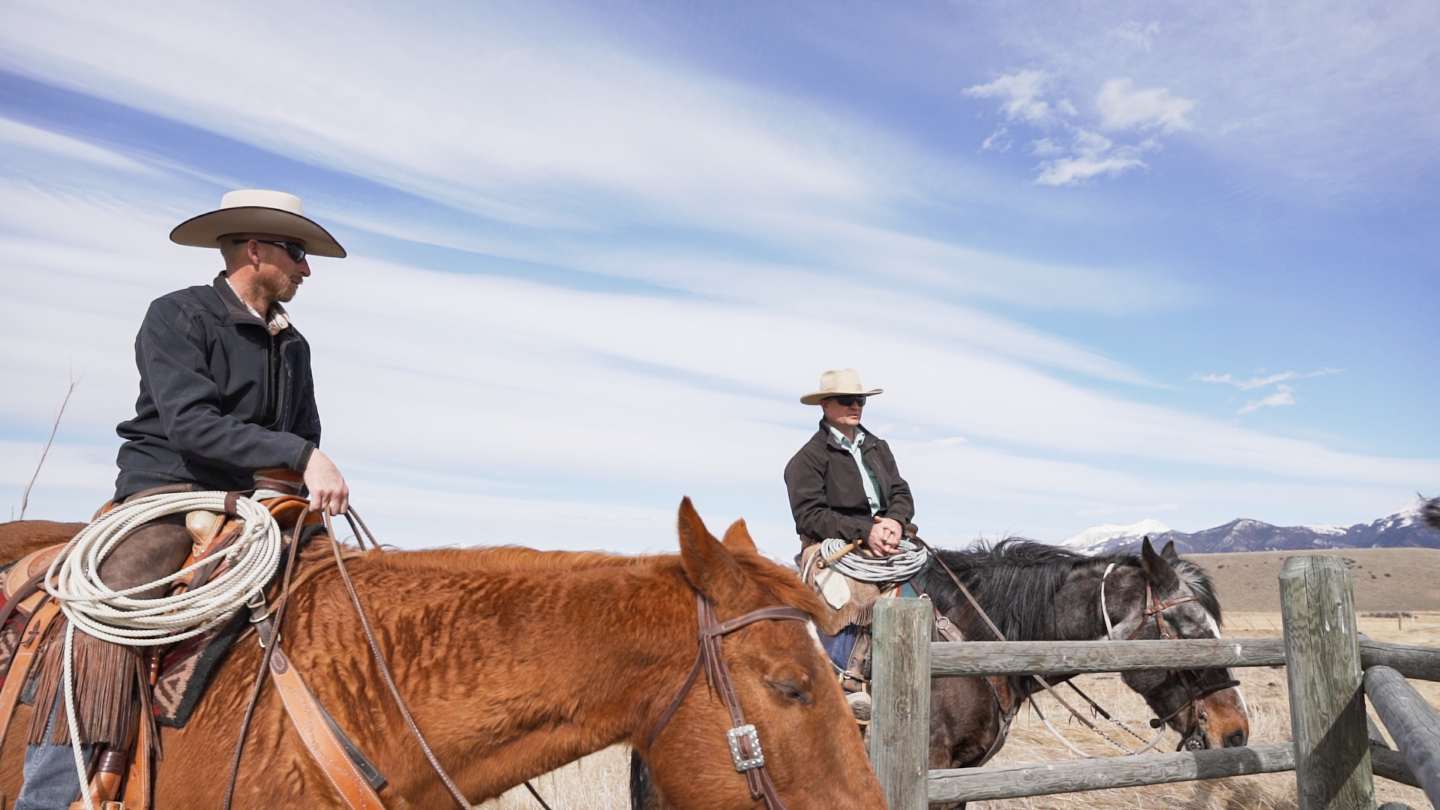
I currently sit on the advisory board for the Dan Scott Ranching Systems major of study at Montana State University Bozeman headed by Dr. Rachel Frost. Incoming prospective students of this major are always asked what one would think is a simple question: “What is a ranch manager?”
Our incoming students imagine an immense variety of roles and responsibilities beneath this seemingly straightforward title. Some students imagine days spent horseback, herding cattle, baling hay, moving water and fixing fence, while bossing a crew and directing the day-to-day activities. Some imagine welcoming guests and managing outdoor recreation or overseeing natural resource monitoring programs over vast landscapes. Others think as a ranch manager they will be responsible for land, livestock, leading personnel, finances, budgets and budget requests to the ranch board of directors, determining which capital expenditure projects to pursue, and setting short, intermediate and long-term goals. These are the same duties that one would expect of the general manager or CEO of any other business enterprise, be it managing a chain of gas stations or a fortune 500 company.
These differing role descriptions aren’t unique to students. I challenge you to jump on Indeed, Ranchwork.com or Western Landowners Alliance’s job board and look at the job descriptions for “ranch managers.” One might say the manager is to focus on landscaping, building maintenance, welding and equipment repair. The next might have them focusing on irrigation and hay production. The next might actually have them focusing on true management activities such as budgets, key performance indicators (KPIs), and being the face of the ranch at industry conferences and the community. The term “ranch manager” is used so broadly it can confuse landowners (especially new landowners) as to what type of employee they actually need and how to find and keep them. That disconnect about expectations can lead to high employee turnover. In the West, a small town with a really long main street as they say, this can spiral quickly toward a reputation that causes high-quality candidates to avoid the ranch altogether.
Do you own a Ranch, really?
This confusion often stems from an equally broad definition of what constitutes a ranch. As a professional ranch manager myself, I suggest landowners, at least while considering their hiring needs, define a ranch as a for-profit business deriving its revenues from owned and/or leased land and the natural resource goods or services that land provides. In contrast, many ranches are in fact what I would call “estates,” where the primary focus is on the enjoyment or preservation of the property by the owners and their guests. Of course, estate owners typically have to balance the books: but natural resource revenue is one of a number of possible means to this end and thus is secondary to enjoyment of the property or other personal goals.
It follows then that the “ranch manager” job descriptions landowners post for would be more effective at finding the right candidates if they used more specific terms. I propose caretaker, estate manager, foreman, and true ranch managers. In the following, I elaborate on the differences between these roles.
A caretaker is generally someone who takes care of the grounds, buildings, and often times the personal assistance or administrative needs of the ranch owner. These employees usually live on site to serve as security and a presence on the ranch when the ranch owner is not present. Skills for these employees are generally more construction, electrical, plumbing, painting and other general maintenance types of skills. While these types of jobs are often advertised as ranch manager jobs, they lack the business success responsibilities and metrics of a truly managerial role. Landowners may find they have a hard time filling or retaining these positions because they are advertising in the wrong pool of potential employees.
Estate managers are similar in many ways to caretakers but also have true managerial responsibilities on the property. They are the signatory on the ranch checkbook. They deal with the insurance agents, the attorney, the accountant/bookkeeper, etc. They generally have responsibility for any hospitality staff on the property as well. Very often estate managers demand a premium salary as they are on call virtually all the time or at least responsible for seeing that the 24/7 staff are organized and things such as housekeeping and maid service personnel are on task and attention to detail in aesthetics and service are observed. These positions may also be responsible for land and animal management, but not in a primary capacity. These jobs are often advertised as ranch manager positions on a “non-working ranch,” a “conservation ranch” or “private recreation ranch.” Estate managers are typically less focused on bottom-line financials, instead prioritizing protecting the “ranching lifestyle,” “hunt quality” or “tradition” for their employer.
Who’s in Charge Here?
On properties that are for intended to be for-profit businesses, such as a working livestock ranch or forestry operation, the distinction between manager and foreman is perhaps the most misunderstood by landowners. It is also, in my experience, one of the greatest causes of friction between employees and landowners. A foreman is essentially the lead hired hand on the property. He/she may be responsible for making day-to-day decisions such as pasture rotations, cattle sales, breeding decisions, leading the crew and keeping them on task. This person often is responsible for certain administrative duties such as seeing that bills and receipts are sent to the ranch bookkeeper. The foreman will most likely be listed on charge accounts and may have a company credit card to cover the day-to-day expenditures necessary to keep the business rolling. Nonetheless, the foreman is directed by the ranch manager (often the owner) and simply relays and carries directions assigned to him/her. They do not, however, have managerial authority to enter into a contract on behalf of the ranch, be a signatory on the checking account or approve the bookkeeper to pay bills.
Most foreman positions are in fact advertised as ranch manager positions: often even the job descriptions appear to be that of a manager, but in fact the landowner acts as manager. An easy way to determine if your employee is a manager or a foreman is to ask this question: If I leave and have no contact with the ranch for a year, does my “manager” have full authority and access to all the tools, people, accounts, etc. to keep the ranch going? If the answer is no, then you most likely have a foreman and you are the actual manager of the ranch.
As long as it falls within approved budgets and activities as agreed upon in annual board of directors’ meetings, true ranch managers have the authority to hire and fire and set pay rates without additional approval. True ranch managers will be the ones to approve payment of bills and determine which business enterprises and capex projects will be pursued.
One of the most frustrating things for a trained, skilled and professionally minded employee, regardless of position or industry, is not being enabled to do the job they thought they were hired to perform. The unmet expectation on both sides is a very frequent cause of employee turnover. I have heard it said that the true cost of fully onboarding a new employee is approximately one year of that employee’s salary. I can’t verify that exact number, but as we all know, employee turnover is very costly and quality ranch management professionals are getting harder to find.
Avoid a Mis-hire
To avoid misunderstandings and potential conflicts when hiring employees some simple recommendations may include.
- Make sure you are looking in the correct place for a “manager.” For instance, more agricultural and land management publications will typically not be the best place to find a caretaker or estate manager, and vice versa.
- Clearly define expectations in a written job description that is reviewed on an annual basis when doing employee evaluations.
- Provide opportunities for employees to evaluate you as their employer as well so that communication of expectations flows freely both ways.
- Provide references on yourself to prospective employees so they can do their due diligence as well. The relationship must be beneficial for both parties for success.
We have just scratched the surface of the topic of employee/landowner relations: Whole books could be written on the subject. For another great read on today’s subject, check out the following article from Dan Leahy in a 2017 issue of Beef Magazine, Manager vs. foreman: A guide to what employees you actually need.

Sorry, the comment form is closed at this time.
Dan Leahy
Thanks, Billy. You are the better writer. The distinctions you make are compounding each year.