

On July 17, the U.S. Fish & Wildlife Service (FWS) released a proposed rule that expands exceptions to the Endangered Species Act (ESA) “take” prohibitions for grizzly bears. “Take” in the ESA is a technical term: see below for details. The proposed rule establishes Tier 1 and Tier 2 management frameworks under which states, Tribes, and federal agencies with approved Conservation Strategies, Management Plans, and Memorandums of Understanding (MOUs) with the FWS could gain greater management flexibility and exceptions for certain forms of “incidental” take. Rather than requiring case-by-case FWS approval for many actions, the rule grants broader management flexibility in areas that have met population objectives so long as the agencies have MOUs in place with the FWS. FWS would retain oversight through specific monitoring requirements and the ability to revoke Tier status if there were substantial changes to state management plans, policies, etc., or conservation benchmarks were no longer met.
The proposed rule is 18 pages long and filled with dense, technical language. Below, I attempt to clarify key issues and answer questions that are already arising from our community about the proposal.
How does this rule effect the rule that was proposed in January 2025?
This proposed rule replaces the 4(d) sections of the 2025 proposed rule, and notifies the public that the FWS is “considering issuing separate final rules for our final determinations on the revision to the grizzly bear listing and the revision to the 4(d) rule.” The Service is required by the terms of a 2024 settlement of a lawsuit, Save the Yellowstone Grizzly v. U.S. Fish and Wildlife Service, to issue its final decision on the listing status and regulatory protections for grizzlies in the Lower 48 by December 31, 2026.
What does “take” mean under the ESA?
Under the ESA, “take” means to harass, harm, pursue, hunt, shoot, wound, kill, trap, capture, or collect a listed species, or attempt to do any of those actions. The proposed grizzly bear rule does not change this definition—it expands the exceptions that allow certain types of take under specific circumstances.
What current exceptions are in the existing rule?
- Self-defense — a person may take a grizzly bear in defense of themselves or others.
- Depredation/nuisance bear provisions — authorized federal, state, or tribal authorities may remove bears that pose a demonstrated threat or cause significant livestock, crop, or beehive depredation under specified conditions.
- Scientific/research — agencies may use bears for approved research activities so long as the taking does not result in death or injury to bears.
What additional exceptions are being proposed?
The FWS is proposing a ‘tiered’ approach that would provide additional management flexibility to state, tribal, and federal partners. Once they develop and implement conservation strategies and management plans, these agencies may enter MOUs with the FWS that would provide greater management flexibility and exceptions for deterrence and incidental take from trapping.
| Baseline | Tier 1: Population objectives not yet met | Tier 2: Population objectives met | |
| Deterrence | Excepted* when in accordance with FWS’s grizzly bear hazing guidelines. | Excepted when in accordance with FWS’s grizzly bear hazing guidelines. | Determined by applicable Federal, State or Tribal laws. |
| Management Activities | Relocation and removal provided with prior approval from FWS. | Relocation and removal provided with prior approval from FWS. | Excepted under applicable Federal, State, and Tribal laws. |
| Incidental Take | Incidental take associated with regulated trapping of other species is excepted in areas and periods defined in a Technical Letter of Assistance (TLA) from the FWS. Without a TLA, there would be no exception for incidental take under this tier. | Incidental take associated with regulated trapping of other species is excepted, provided trapping is conducted in accordance with Federal, State, or Tribal laws and regulations. | Incidental take is excepted, provided those activities are conducted in accordance with Federal, State, or Tribal laws and regulations. |
* “Excepted” take is the legal term. Any take is illegal unless “excepted” by the 4(d) rule.
In addition to the tiered management framework, the rule proposes to expand some existing exceptions to make it simpler for state or tribal agents to transport, aid or euthanize injured bears, and transport and aid orphaned cubs.
What is the significance of the Tier 1 and Tier 2 Management Frameworks in this proposed rule?
The Tier criteria provide a framework for states, Tribes, and federal partners to gain greater management authority and flexibility with grizzly bears. Tier 1 and Tier 2 status do not occur automatically. States and Tribes must choose to participate and enter into an MOU with the FWS before the additional take exceptions become available. To enter into an MOU, the state, Tribe, or federal agency must have a conservation strategy and management plan for grizzly bears.
Tier 1 applies to areas where a conservation strategy and management plan are in place, but population objectives have not yet been met. In Tier 1, additional take exceptions are limited primarily to incidental take associated with the regulated trapping of other species.
Tier 2 applies where a conservation strategy and management plan are in place, and demographic objectives have been met. In these areas, additional management-related exceptions are available, as outlined above.
Does the proposed rule change the listing status of the grizzly bear?
No. Grizzly bears in the lower 48 would remain listed as threatened under the ESA. Instead, the proposal revises the species-specific 4(d) rule by expanding and clarifying the exceptions to ESA take prohibitions and establishing a new Tier 1 and Tier 2 management framework for Federal, State, and Tribal agencies.
What regions or areas does the proposed rule apply?
The proposed rule applies everywhere that the bear is listed in the lower 48 states and does not impact experimental populations or the 10(j) rules of the ESA. An experimental population is a special designation for a group of plants or animals that are restored in an area that is geographically isolated from other populations of the listed species. 10(j) refers to the provisions of the ESA that govern experimental populations.
Why isn’t the FWS proposing to delist grizzly bears in recovered ecosystems, such as the Greater Yellowstone Ecosystem (GYE) and Northern Continental Divide Ecosystem (NCDE)?
Delisting a species under the ESA requires more than simply reaching population objectives. Before a species can be delisted or downlisted, the FWS must evaluate the five listing factors under the ESA:
- Whether there is present or threatened destruction, modification, or curtailment of the species’ habitat or range.
- Whether the species is subject to overutilization for commercial, recreational, scientific, or educational purposes.
- Whether disease or predation is affecting the species.
- Whether existing regulatory mechanisms—including those implemented by states and other entities—are adequate to ensure the species’ long-term conservation.
- Whether other natural or human-caused factors affect the species’ continued existence.
The FWS attempted to delist the GYE grizzly bear population in 2007 and again in 2017. Both decisions were overturned in court. In 2018, the U.S. Court of Appeals for the Ninth Circuit held that the FWS needed to address several issues before proceeding with delisting. Among other things, the court found that the FWS needed to evaluate how delisting the GYE population would affect the remaining grizzly bear populations and ensure that adequate, enforceable mechanisms were in place to maintain the Yellowstone population’s long-term genetic health.
This proposed rule pertains only to the 4d rules of the ESA and does not affect the listed entity or listing status of the grizzly bear.
How and when can I comment on the new rule?
Comments on the 2026 proposed rule are being accepted through August 17th, 2026. Already, more than 16,000 comments have been submitted. Only comments submitted through the Federal Register at the link below or via the instructions on that page will be considered by the USFWS. https://www.federalregister.gov/documents/2026/07/17/2026-14450/endangered-and-threatened-wildlife-and-plants-grizzly-bear-listing-on-the-list-of-endangered-and#open-comment
Whether or not you plan to submit a formal comment, I would love to hear from you. Do you have questions or comments about the proposed rule? What elements do you like or want to see improved? Please let me know by commenting below.
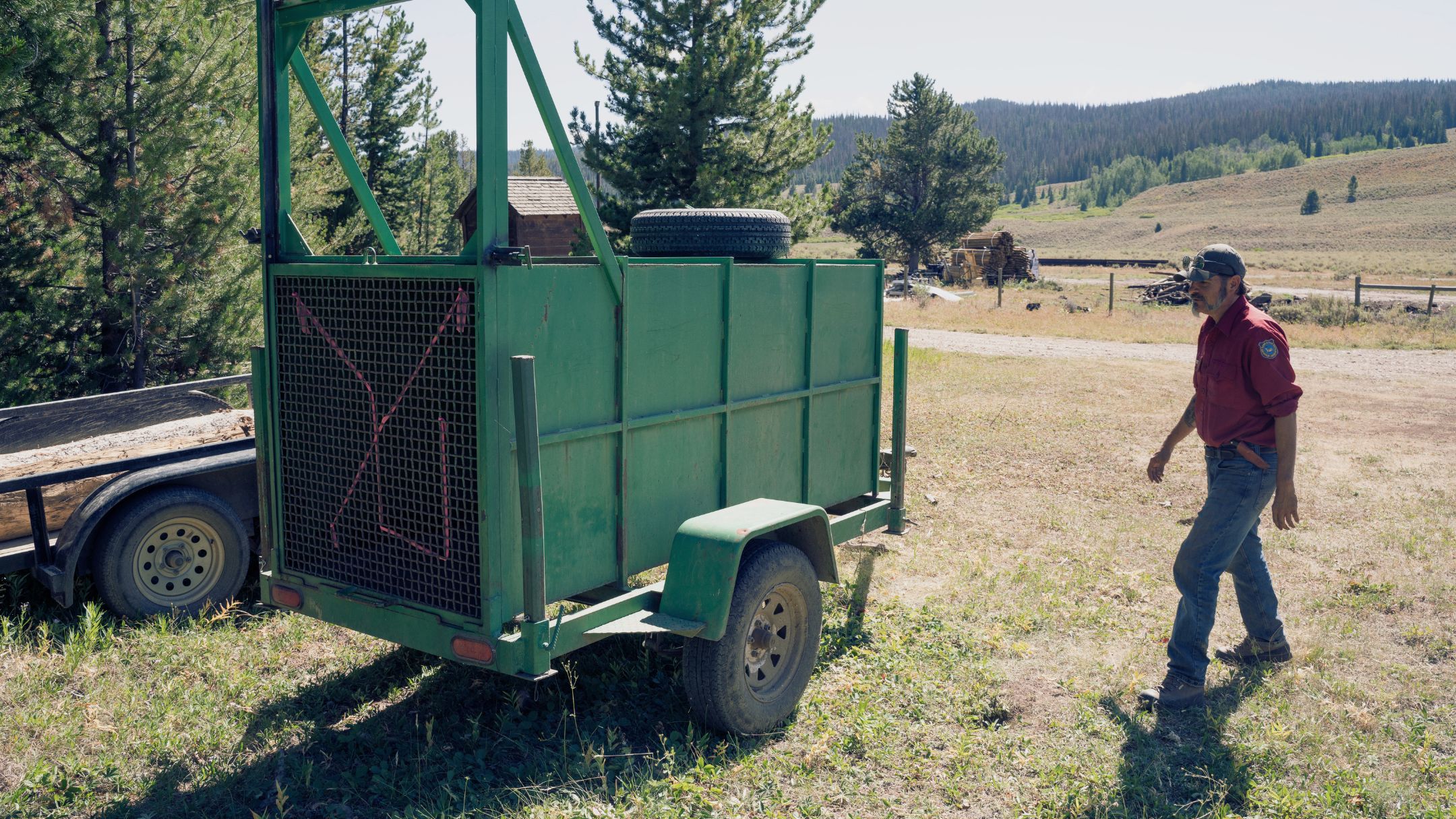
Featured image: Dan Thompson, Large Carnivore Supervisor for Wyoming Game and Fish approaches an empty bear trap used to capture bears (both black and grizzly) for management action. Photo by Matt Collins/Western Landowners Alliance.

Goeste
You make complex topics feel so accessible.