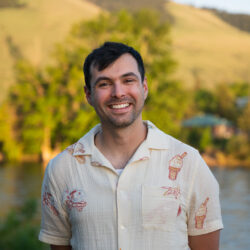
How can landowners and researchers learn from each other? Just ask Erik
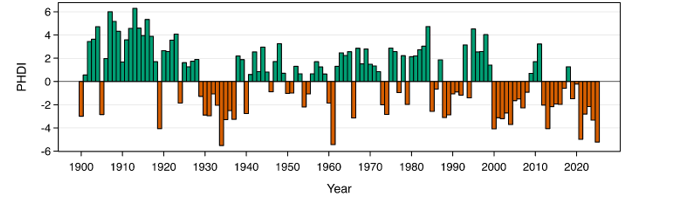
MELROSE, MT— Kalsta Ranch averages seven inches of rain per year. Erik Kalsta, the director of Western Landowners Alliance’s Working Wild Challenge program, will tell you to take that number with a grain of salt. Drought has been the new norm in the Big Hole Valley for the past 26 years, and you don’t have to take Kalsta’s word for it: just look at the state of Montana’s drought monitoring measurements.
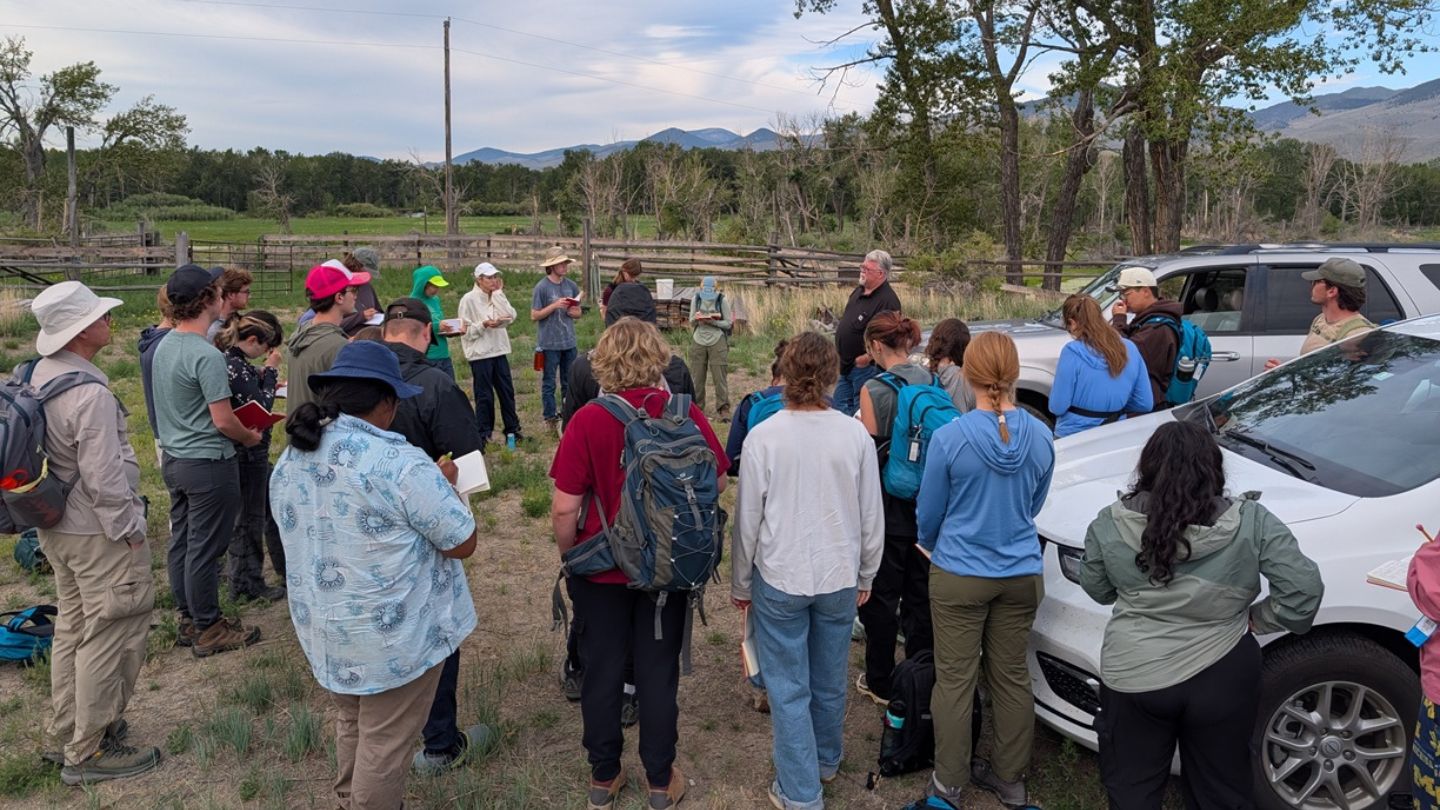
Kalsta’s relationship with this arid landscape is a complex one. It makes certain things more difficult, like raising sheep. But it offers unusual opportunities, too. This July, two summer courses of undergraduates from the University of Michigan visited Kalsta ranch to learn how the family has been stewarding this land, conduct scientific experiments on the Big Hole River, and get a glimpse at the distinct opportunities for research and knowledge-sharing that private lands can offer.
Courses and horses
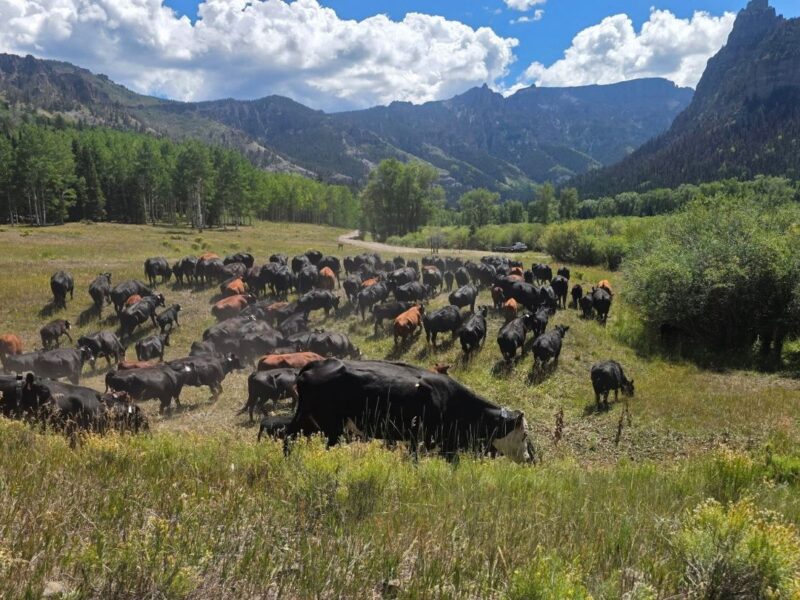
Kalsta’s family has been on this property for 125 years and five generations. His great-grandmother rounded up horses abandoned by their owners during the Great Depression, and his family has raised cattle and sheep for decades.
Kalsta has opened his property to researchers from the Wild Rockies Field Institute, University of Montana Western, and now the University of Michigan. (He told me he has a soft spot for wolverines.) Beyond that, his property has hosted Montana Fish, Wildlife & Parks bighorn sheep wildlife technicians and his wife, Jami, has been conducting her own monitoring of grizzlies and other wildlife on their property.
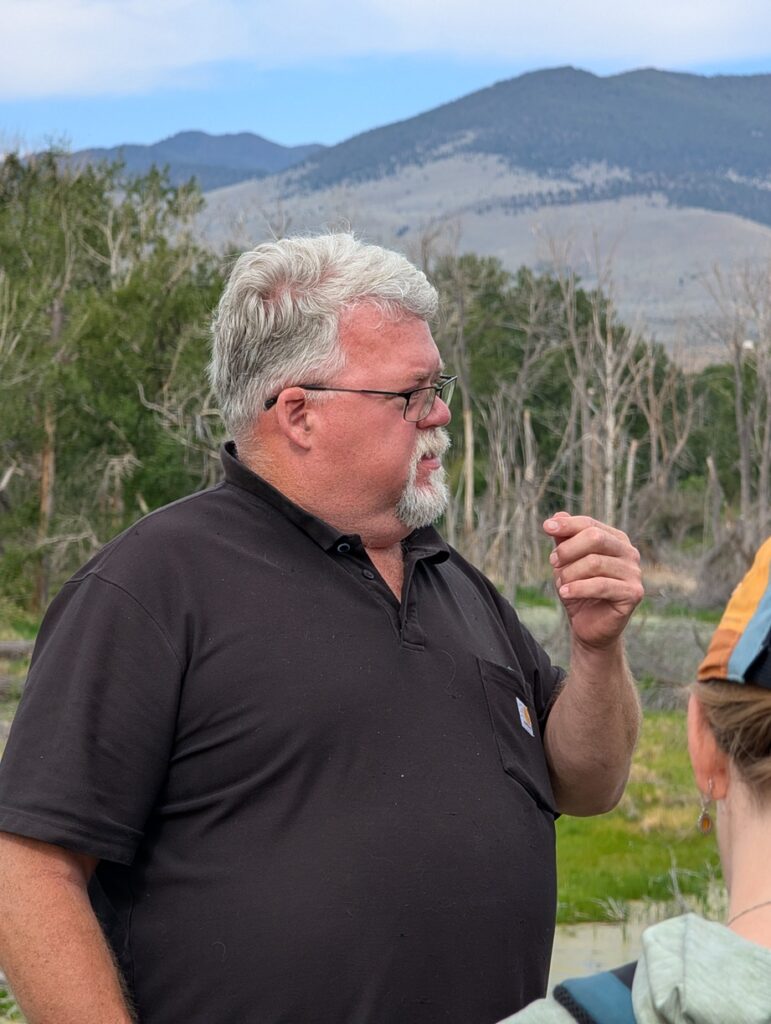
Professor Rose Cory grew up just down the road in Dillon, Montana. Now the associate chair for curriculum and undergraduate studies at the University of Michigan’s School of Earth and Environmental Studies, Cory is responsible for shepherding undergraduate and graduate students through the program’s degrees. Prof. Cory knew the Kalsta Ranch from growing up in the area, and after learning UM’s Camp Davis, the school’s field camp in Jackson Hole, Wyoming, would be closed for the summer, she reached out to find other opportunities for students to do the field work required to complete their undergraduate degrees.
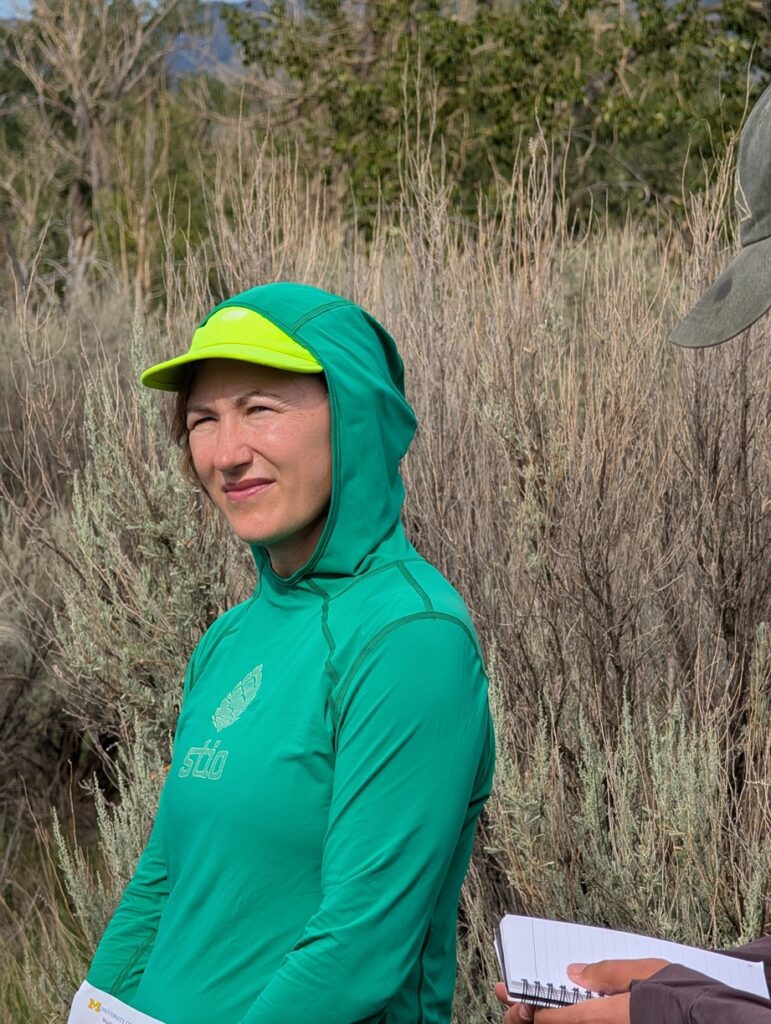
“This is an awesome opportunity,” she said during the first week of field research with the introductory earth science course. “Had I not known Erik, I never would have thought of contacting him to come here.”
On the menu for both undergraduate courses was some important physical labor that students took to like ducks to water: building rock weirs.
Stacking rocks
In the first On Land, On Water podcast, I got to visit Erik’s property to see how rock weirs, small rock damming devices that slow water down in gullies and other high-erosion areas, have functioned on his property. These constructions keep soil where it is supposed to be, and water where it can be best put to use. The process of building them is simple: you grab some rocks, on which Erik’s property there is no shortage of, and you Build a short wall-like structure across the bottom of a draw or gully. Then, you wait for rain.
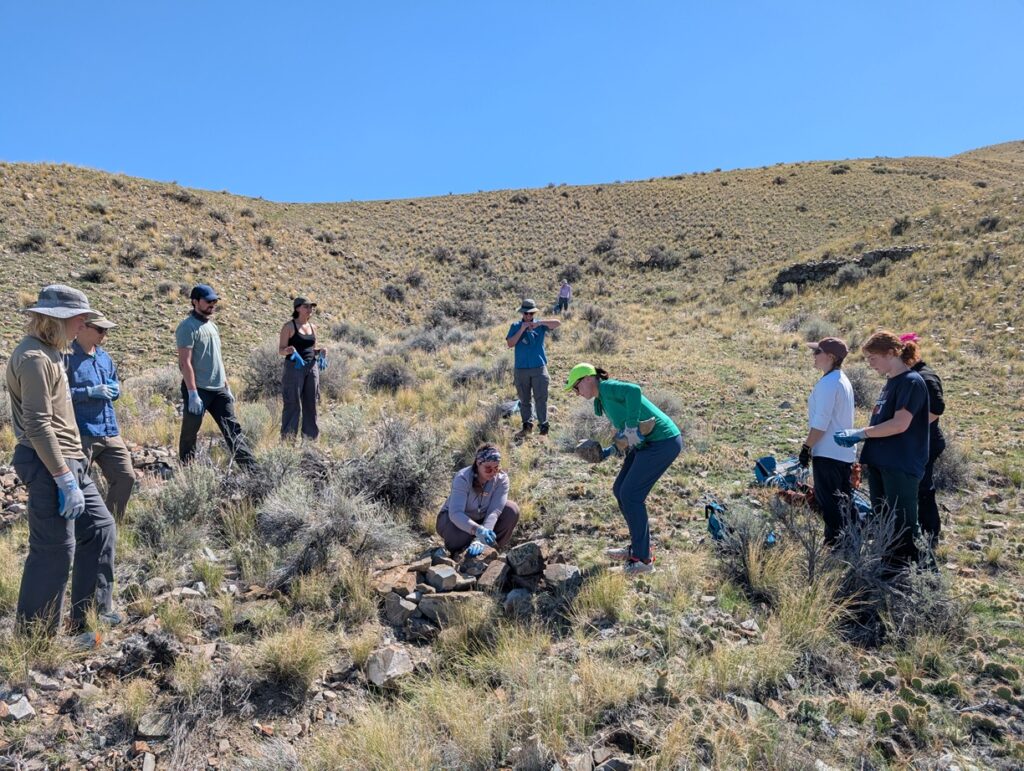
Since 2015, over 300 rock weirs have been installed in 3.5 miles of dry gullies on the property, to which the students added a few dozen this summer. This labor has an important purpose, Erik noted.
“It’s not about the method, it’s about the focus (uplands), water, and the potential impact,” he said. “My goal is that in 40 years, when these students retire, I want to imagine them driving by here on a retirement trip to Glacier, and maybe they can look over at this mountain and the draws will be green, or if it’s not that overt maybe cool water aquifer returns will continue to support a thriving trout fishery.”
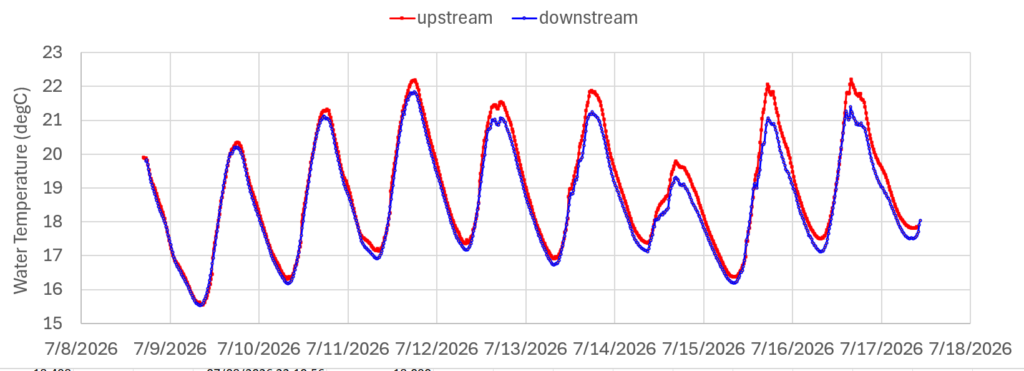
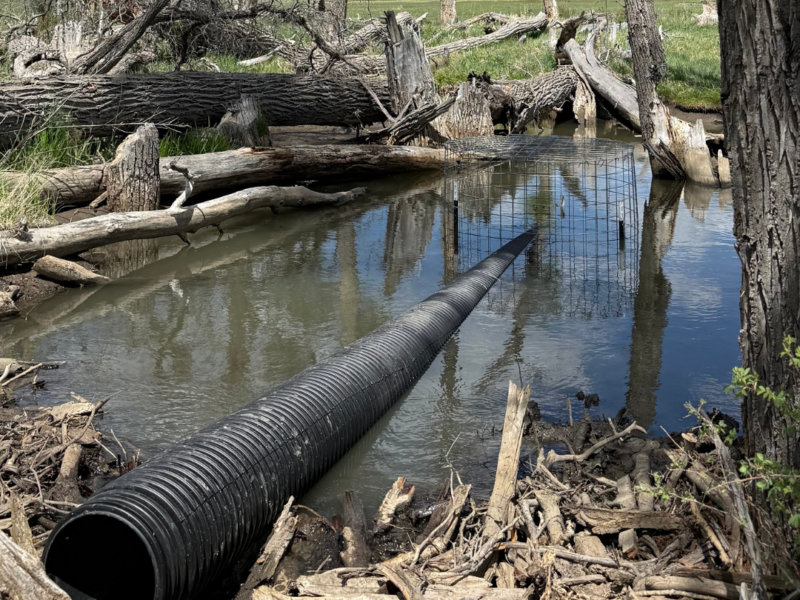
As part of the course, students installed temperature gauges in the Big Hole River at the edge of Kalsta Ranch, where an oxbow of the river has been modified to enhance cool water irrigation returns to the Big Hole. After a week of operation, these HOBO sensors (HOBO is the brand name) showed that Erik’s project is making an appreciable difference in the river’s health.
In other parts of the watershed, Cory’s students have been gathering water samples from the Big Hole River to measure what is in its water, including pH, alkalinity, and specific conductants.
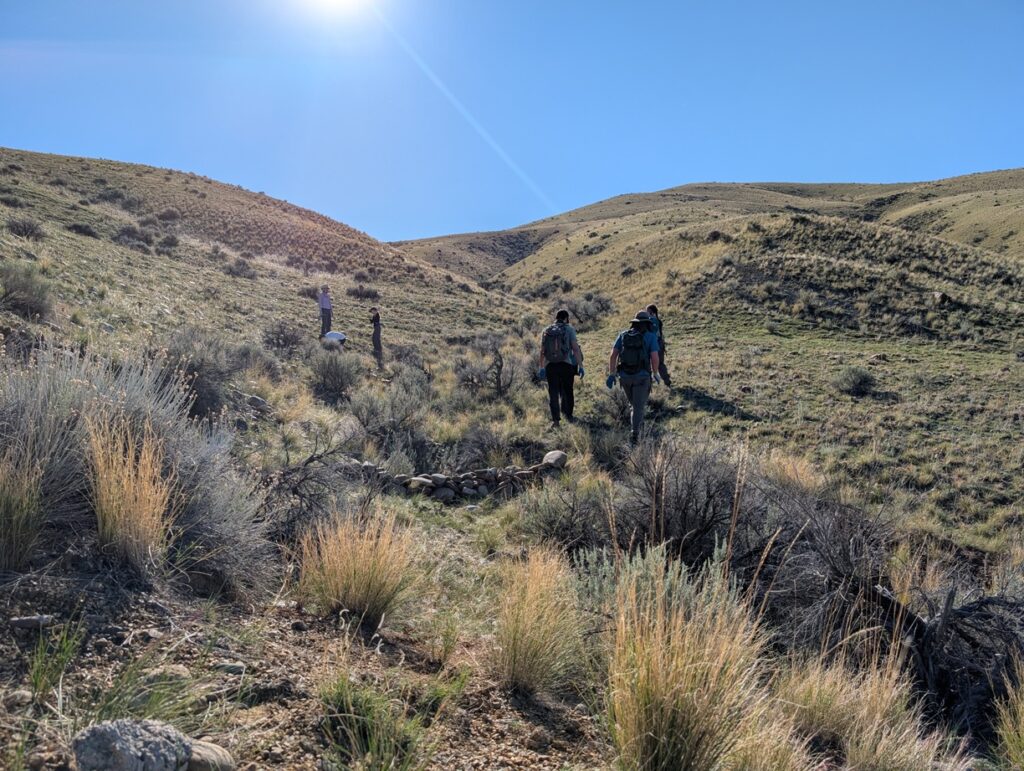
“How will these established weirs be filtering sediments?” Cory asks. By taking spot samples and doing experiments to determine those answers, her students learn about the processes that impact things like water quality. In this case, it provides Erik with more information about his land and gives students who hail mostly from east of the Mississippi River an opportunity to see how Western landowners are working to keep their lands whole and healthy for future generations.
“Landscape ecology does not move in a time frame that humans have funding or make decisions in,” Cory said. But thinking multi-generationally, like Kalsta, makes a major difference for the land.
“This is not work that will create instant change,” Kalsta said. “Rather, the effects will be slow, cumulative, and long-lasting. For my small place this is a grand experiment, and one that I hope has lasting impact both on and beyond my property.”