One In A Thousand: Drought Strikes Colorado River Basin
The western United States should be emerging from the icy grips of winter, but this year sun tans are emerging early and wildflowers are confused because this year, there was practically no winter at all. Instead, farmers, ranchers, scientists, and government officials are trying to handle a year that is much closer to something out of the 2080s rather than the 2020s.
On Land spoke with scientists, water managers, and ranchers to get a better understanding of how bad this drought actually is, how it’s going to challenge ecosystems and agriculture, and what it might mean for the years to come.
How bad is it, really?
The Rocky Mountain Biological Laboratory is located in Gothic, Colorado, in the Gunnison Basin. This is true high country, with one of the coldest climates in Colorado and for that matter, the American West. For the past half-century, the lab has been monitoring snow and climate in the West Elk Range, just outside of Crested Butte. And this year has been “unprecedented,” according to RMBL’s principal research scientist Dr. Ian Breckheimer.
“The conditions we saw in March this year were incredibly unlikely. If we take a look at the last few decades of observed climates … this was a less than 1% annual probability event,” Breckheimer said.
The snow drought has different levels of intensity in the areas RMBL keeps track of, but none of them are good:
- Gunnison Valley slopes and lower elevations: a 1-in-60- to 300-year event
- Crested Butte valley bottoms: a 1-in-300- to 400-year event
- Mid-slopes of Flat Top Mountain and surrounding areas: a 1-in-500- to 1,000-year event
The odd thing about this year is that October to March precipitation was only a little bit below normal, according to Breckheimer. But instead of snow much of it fell as rain, particularly at high elevations and early in the season. That is bad news for the summer.
For anyone looking at the numbers provided by SNOwpackTELemetryNetwork (SNOTEL), an automated system of snowpack and related climate sensors operated by the Natural Resources Conservation Service (NRCS) of the United States Department of Agriculture in the western United States, there can be some dissonance. The monitors might say the snowpack looks good in some places (and reflects record lows in others), but Breckheimer cautions that they are not the perfect tool to describe how bad the snow drought is.
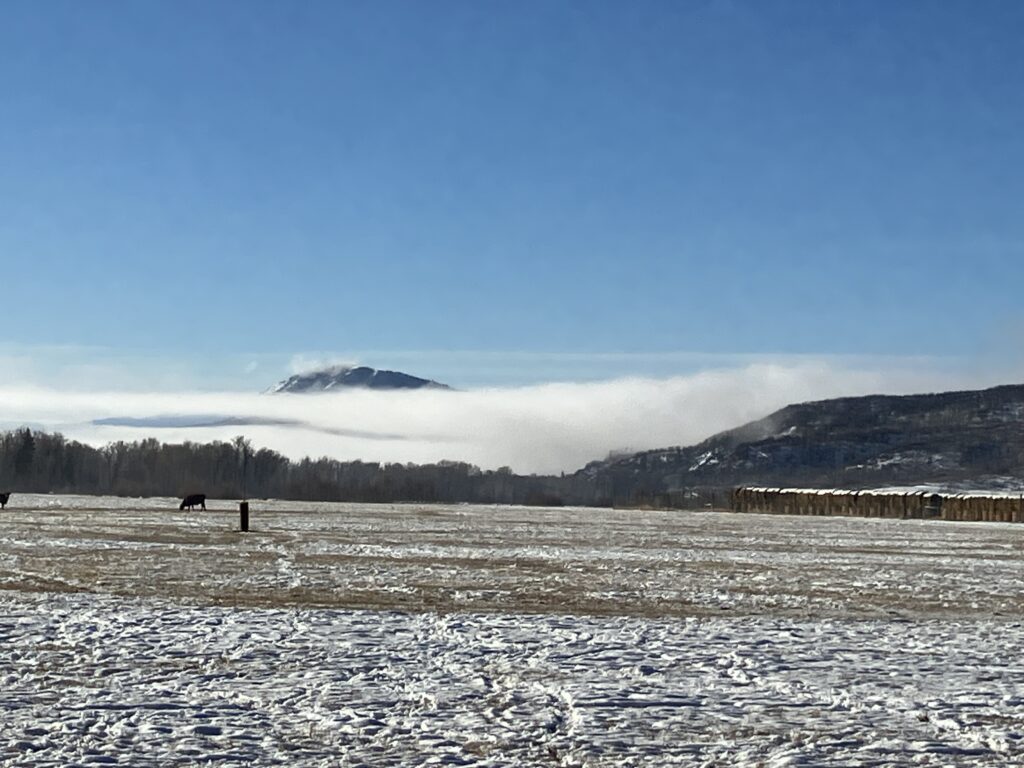
“A lot of the SNOTEL sites are high enough to not fully capture snow drought driven by really warm temperatures,” he said, and the unusually warm temperatures this year are to blame. “At low elevation where it’s close to the temperature where snow melts, a degree or two or four makes a lot of difference.”
RMBL’s data shows that over the past three decades, snow has melted up to three weeks earlier on average in comparison to the mid-1900s. This year is obviously an outlier, but Breckheimer says it does offer an opportunity to see into the future.
“This year was teleported in from the 2080s to today. It gives us a better understanding of what a typical winter will look like in the 2080s,” he said, and noted while there was both “excitement and fear” about the impact of the dry season, there was a great opportunity to answer some scientific questions.
“There is a lot of work going on around the western United States to put this event and winter into context. I think a lot of times people can get caught up in how strange or inconsistent or consistent it is with long-term climate change, but what is lost in those types of stories is the on-the-ground impact,” Breckheimer said. That includes worsening fire risk, but also reduced irrigation availability and financial losses for agricultural producers because the snow that provides water late into summer is not there this year.
“We don’t have that big water tower in the sky,” Breckheimer said.
Too much, too early, too fast
Adding to the impacts of reduced snowfall, this winter has also been unusually warm and that warmth has sped up everything across the West. Wildflowers are blooming four-to-six weeks early and parts of what is usually a white, snowy landscape are turning green in March. In Utah, wildflowers are blooming normally on one section of a trail and are dormant on another just a mile away. Snowpack in the Southwestern Utah and Escalante-Paria basins are at 17% and 0% of the 30-year median, according to Utah’s Division of Natural Resources, but an unusual March heatwave that severely depleted the rest of the Colorado River Basin’s snowpack is what damaged desert wildflowers, according to the Salt Lake Tribune’s Open Lands Newsletter.
Breckheimer says events like these early and late wildflower blooms are a mismatch between water and time. For agricultural producers, that can create problems.
“It is very possible … the late March runoff is close to the seasonal peak of streamflow,” he said. “Private landowners will have to take withdrawals from the river earlier than otherwise.”
“It’s a challenge for the ecosystem as a whole.”
Marking the ledger for 75 years
Paying attention to the strange patterns in the weather and climate is something landowners have plenty of experience with. Another Rocky Mountain denizen has been keeping that sort of data for the past several decades. Jay Fetcher, WLA member, rancher, and owner of Fetcher Ranch just outside of Steamboat Springs, CO, has over 70 years of records tracking when snow disappears from the meadow outside his home. Since his father began tracking this in 1950, this year’s snow off date of March 2 is the earliest ever recorded by the Fetchers.
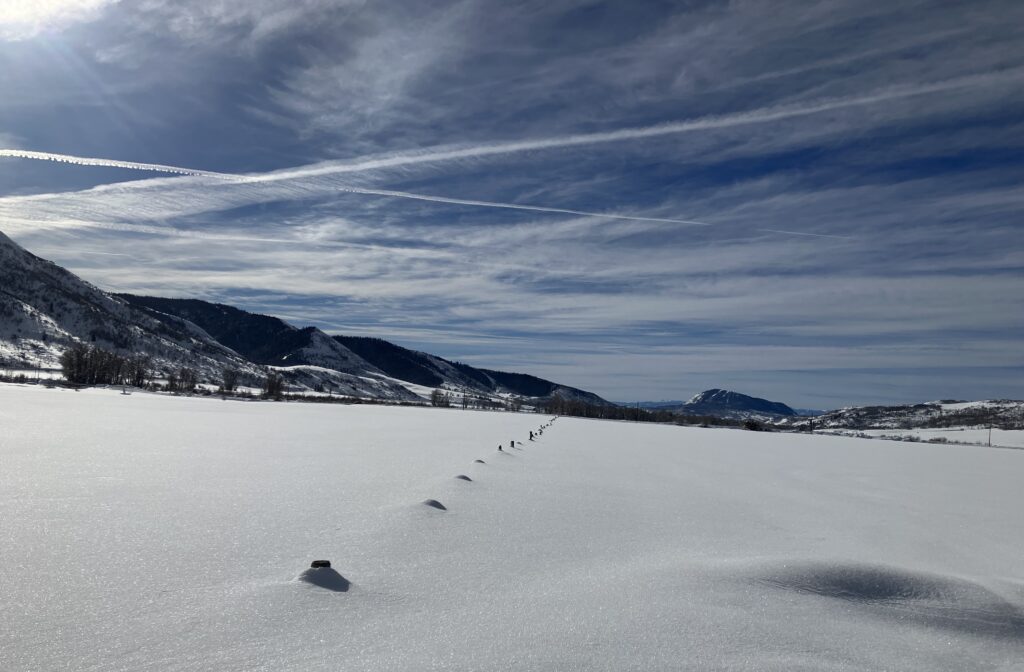
“If you look at the data of the 1950s, the range between earliest and latest snow off is 18 days. The range has moved up,” Fetcher said, with the 2020s having 60 days between earliest and latest snow off. The volatility of year-to-year weather patterns makes planning difficult for the 170 cow/calf pairs Fetcher has on his property.
“We may have to reduce the cow numbers based on hay productions, and that’s part of adapting for what’s coming up,” Fetcher said. “We have to cross our fingers.”
If things don’t improve and the small streams in the leased high-country allotments he uses to fatten the cattle up in the summer run dry, Fetcher is considering reducing his herd to compensate. But he did note that unlike the extremely snowy year of 2023, the ranch did not have to spend much on fence staples.
“In the spring of 2023, when you can’t see the fences, we went through seven 50-pound boxes of staples fixing fence. This year, there’s not a staple missing,” Fetcher said.
The impact is happening now
Figuring out what this drought is going to mean not just for a single rancher, but an entire valley, is what Sonja Chavez has on her plate. Chavez is the general manager of the Upper Gunnison River Water Conservancy District and is responsible for the operation of the district’s infrastructure, reservoir system, and working with industrial, recreational, agricultural, and municipal water users.
“We’re involved at every level from local, to state, to regional,” Chavez said about the district’s responsibilities. The UGRWCD has been dealing with the effects of drought for the past three decades, Chavez said, although this year is “certainly unprecedented.”
“We live with drought every year, practically. Producers are long-term ranching families, with fathers and grandfathers that taught them to manage the water and the type of decisions they make,” Chavez said about the agricultural community in the Upper Gunnison. All that experience is running up against a winter that was 9-15 degrees Fahrenheit warmer than normal. The snow drought has compressed everything for producers.
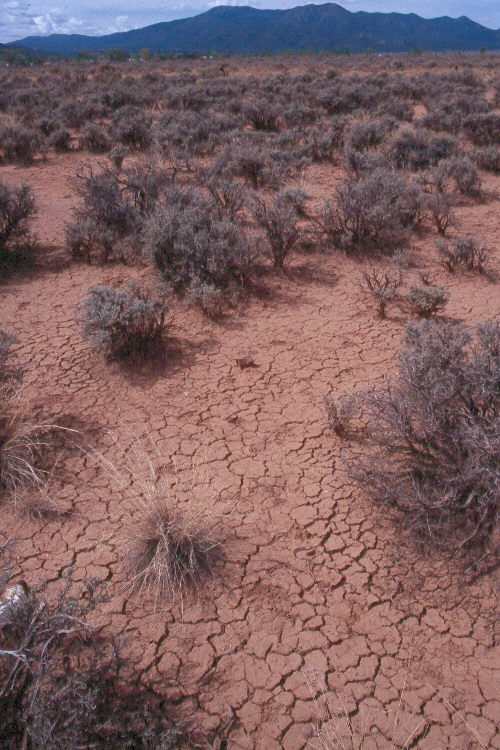
“In agriculture, there’s a tempo to it,” Chavez said. Springtime is for calving. The summer is for high country grazing and irrigating hayfields. But with peak snowmelt happening up to 45 days earlier than usual in the Upper Gunnison, everything is speeding up.
“It’s really important for people to understand, all those things got compressed into a shorter time frame. You can’t put water onto those fields when calving, you can’t put them on wet ground,” she said, and that meant farmers lost out on prime irrigation flows.
The UGRWCD already held an emergency community meeting on April 14, as water conflicts are already starting to heat up between water users in the Upper Gunnison. Chavez said the issues were more to do with people’s unfamiliarity with Colorado water law but was impressed by the way people were pulling together to work out how to best use what little water is going to be available.
“Producers know what to do,” Chavez said, but warned that, “everybody is going to feel the pain this year.”
Different basin, same issue
It isn’t just the Colorado River Basin that is facing these issues. Adrian Hunolt is a rancher in the Bear River Basin, which northeastern Utah, southeastern Idaho, and southwestern Wyoming. This winter has been one of the oddest and driest he has seen. Hunolt and his family run a base herd of 300 cows and custom graze about 1,000 yearlings on leased ground most years. With the ranch sitting at 8,000 feet in the foothills of the Uinta Mountains, the growing season is short and huge snowfall amounts the norm.
“On a normal year when we start calving first of April. There’s usually between two and four feet of snow on our meadows. It’s not unusual to use a blade to clear off a bit of ground to have a bit of bare ground,” Hunolt said, but 2025-2026 was very different, “This year you can count on two hands when snow covered the ground.”
The snow drought is not just hitting ranchers. Hunolt is a commissioner for Upper Wyoming on the Bear River Commission, a multi-state organization in charge of enforcing the Bear River Compact. In his position, he helps make decisions about water in the drainage, and said this year two municipalities (Lyman and Mountain View, both in Hunolt’s county but in the Colorado River Basin) are already in water trouble.
“A lot of their water supply comes from reservoirs. They got depleted last fall, and just got a little bit of snow and rain. As of now, they’re in real trouble,” Hunolt said.
Municipalities and ranchers both face dire straits when severe drought lasts multiple years. Hunolt noted this winter did save him a lot of hay, but it also won’t help him put hay up for next year.
“One year of drought you can survive. Back-to-back dry years, it’s so much more difficult,” he said. The seesawing effects of drought and huge snow years are frustrating for ranchers, Hunolt added, because balancing between extremes makes life harder.
“We have to try to figure out how much money do we want to invest on the meadows we might be able to irrigate this year, and how many cows to bring on,” Hunolt said. He is still deciding if he will fertilize his meadows, and with rising costs of fertilizer and uncertain irrigation, the decision becomes more complex.
“There’s a lot of hard decisions to make in a year like this,” Hunolt said, and added, “they have more consequences.”