The U.S. has pastoralists. We usually call them ranchers.
There’s a pastoralist proverb that says: If you’re lost in the desert and find a sheep, you’ll be home soon. But if you find a camel, you’re in trouble.
If camels and pastoralists sound a bit distant, the wisdom applies in the American West, too. It’s about understanding the relationship between the animals one raises and the landscape they’re raised on. That deep knowledge – and the ability to put it to practice – is imperative to food security, rural communities, resilient ecosystems and rangeland health.
In recognition of pastoralists in the United States, Senators Cynthia Lummis (R-WY) and Ben Ray Luján (D-NM) passed a resolution in March, co-sponsored by senators from 10 other states, declaring 2026 the International Year of Rangelands and Pastoralists.
It’s part of a larger United Nations campaign to spotlight these landscapes and communities globally. Roughly 2 billion pastoralists across the world raise a diversity of livestock including goats, sheep, bison, camels, llamas, reindeer, yaks, cattle, turkeys and even ducks. Despite the variety, they’re all facing similar risks.
Home on the Range
From the steppes of Central Asia and the African savannas to America’s high deserts and Great Plains, rangelands account for about half of the world’s landmass. More than one-third of the U.S. is rangelands – or about 770 million acres that can be used for grazing largely on native plants. Many of those acres spread across remote, challenging landscapes with extreme weather, and their importance is sometimes overlooked. But ranchers know better.
“A lot of times people think of rangelands as primarily related to commodity production – beef, lamb, these sorts of things. But they do so much more,” said John Walker, president of the Society for Range Management, which lobbied for Congressional recognition of IYRP. “There’s so many ecosystem services. Most of the water that we have comes off of rangelands, they sequester carbon, there’s wildlife habitat. The list just goes on and on.”
In arid or semi-arid rangelands, plants’ deep roots do a lot of heavy lifting, enhancing soil health and structure, and storing and filtering water. They also moderate soil surface temperatures and prevent soil erosion. Regenerative ranching practices rely on this native vegetation while simultaneously supporting it, creating a cascade of positive downstream impacts from water levels to wildfire breaks.
When Walker hears the common misconception that “nature can take care of itself,” he brings up the long-standing use of wildfire by Indigenous communities and even the quiet work of beavers on waterways. “Lands are managed one way or another,” he said. “The biggest thing” to take away from the IYRP, Walker added, is that continued management is necessary. Pastoralists are rangeland’s natural managers.
The old croon “Home on the Range,” along with other familiar Hollywood adaptations of the West, has kept rangelands in the American parlance. But what about “pastoralists”?
The root of pastoralist identity
Pastoralists’ livelihoods depend on herding animals and rangelands, according to the Food and Agriculture Organization of the U.N. They traditionally live nomadically, moving seasonally. Flexibility and adaptivity, then, are baked into the term – strengths that are increasingly needed in a changing climate. Yet, economic and political forces, and land use restrictions, are seriously curtailing those adaptations in many parts of the world.
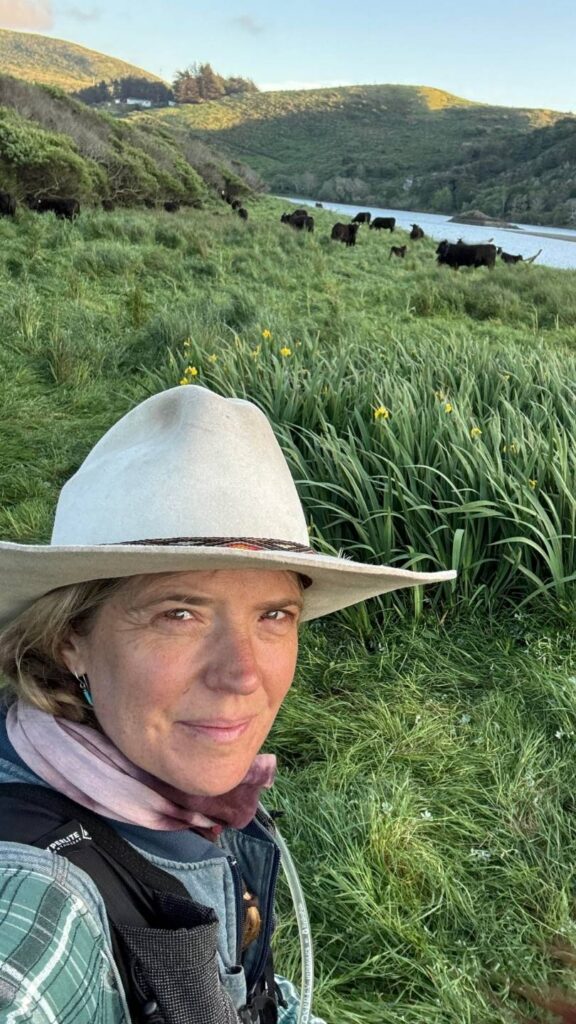
Doniga Markegard raises cattle and some sheep along the high bluffs of California’s Sonoma coast. She labels herself a “rancher” using regenerative practices but is also interested in traditional nomadic lifestyles. She’s registered for a charity horseback expedition later this year, covering over 2,200 miles across Mongolia – known for its nomadic people – to benefit the country’s displaced herders.
In a meeting about the ride, a translator was searching for a Mongolian term to describe Markegard’s work. “Come to find out, ‘nomadic herder’ is that term for grassland expert,” she recalled. “There is no separation in the Mongolian language of nomadic herders and someone who’s very deeply connected to the land.”
For Markegard, the work that lives up to these terms honors both human and animal knowledge of the land. So, when she notices her cattle grazing hard on a favored plant species, she knows to keep animals off that pasture until those plants have regrown. It’s just one example of the constant wordless communication she’s part of.
“It’s really the magic of those animals that evolved with these grasslands – the hooves and rumen and manure and urine – that are moving them towards more biodiversity, towards greater resiliency from drought, more organic carbon in the soil, which holds more water and feeds the microbes,” Markegard explained. “And so, it’s those herds that are then moving that ecology.”
Although she manages the technical details of the operation, Markegard considers her animals the leaders of the grazing plan. “It’s this symbiotic relationship with the pastoralist, nomadic herder or rancher – and their animals and the land,” she said.
There are other labels used in global rhetoric. Mark Moritz, anthropology professor at Ohio State University, explained that different labels are imbued with different associations, but come from the same foundation. “The identity of Mongolian pastoralists is not the same as a rancher identity,” he said. “But in both cases, the identity is based on the work of working with animals in the landscape.”
The work defines the identity – not the other way around.
The near-loss – and incredible recovery – of a pastoral system
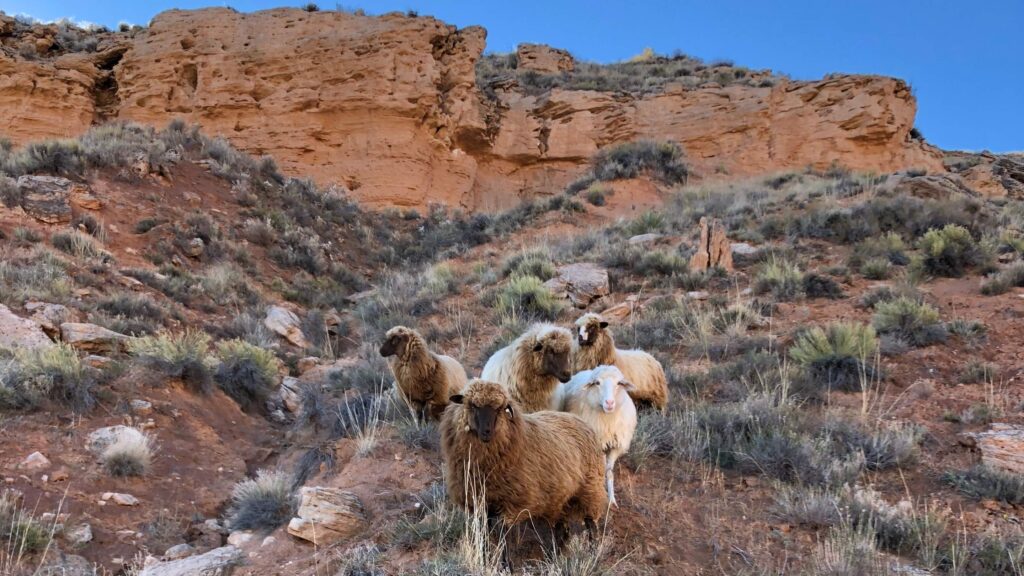
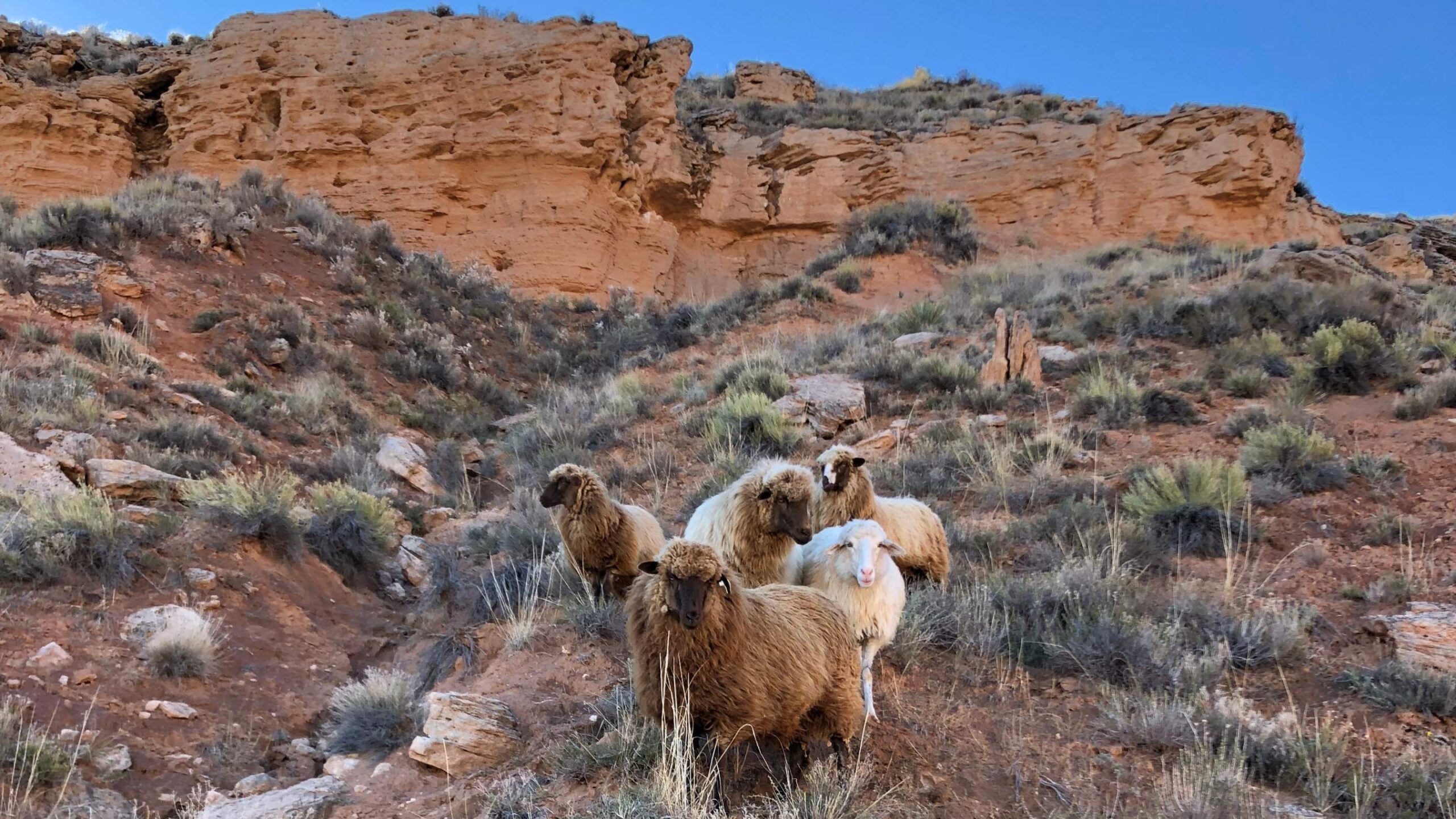
Among the sandstone mesas and silver-green sagebrush of northeastern Arizona lives a special breed of sheep. Their shaggy, hair-like wool comes in a dynamic palette of colors – not just white, gray, black and tan, but also silvers and golds. Some grow glorious gradients in one coat.
These are Navajo-Churro sheep, considered sacred to the Diné people, who use their wool in their renowned woven textiles. First introduced to the American southwest by Spanish colonists, Navajo-Churro sheep had become central to the Navajo economy and culture by the 19th century. The animals are uniquely well-suited for the extreme Southwest environment compared to other sheep. They weigh less, have narrower bodies, longer legs and higher udders, so they can move efficiently and lightly across landscapes. Their wool, made of three types of fibers across two layers, both shades and insulates, enabling the animals to handle extreme temperatures. They eat a wide range of plants, including more toxic species. Plus, they birth well – often lambing twins or triplets – and mother fiercely.
But Navajo success with the breed was targeted when, in 1868, as part of a deadly cultural erasure campaign, Colonel Kit Carson and his troops decimated their flocks before forcing the Navajo on “The Long Walk” from their homelands. Colonists later introduced Merino sheep, which they considered a superior breed, to the Navajo people. The Navajo-Churro were thought to be nearly extinct.
A century later, Lyle “Doc” McNeal, a professor of animal science, was with students on a field trip in California when he came across some Navajo-Churro sheep. Inspired by the unexpected sighting, he launched the Navajo Sheep Project to establish a rescue and research flock. Diné producers and weavers started receiving sheep from the project in 1982.
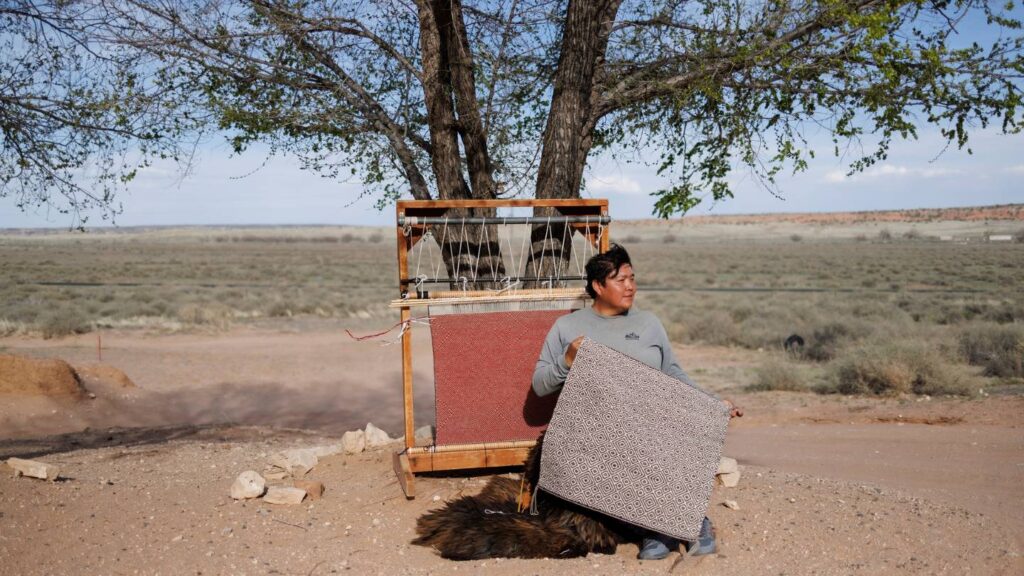
Nikyle Begay is a weaver who has raised the breed for 25 years on the Navajo Nation. They refer to themself as a “shepherd,” but says some elders call themselves “sheep herders,” which is a more direct translation from the Navajo language. Some of their earliest memories are beside their grandmother at her loom or with her sheep – just a few Navajo-Churro sheep within a larger commercial flock. The breed’s incredible comeback overlapped with Begay’s childhood, and they felt called to work with the animals and continue the Diné weaving tradition.
Even in the mixed flocks they saw as a child, Begay said their family trusted and revered the few Navajo-Churro sheep the most. “The Navajo would say the commercial sheep were ‘silly.’ They didn’t know how to come home at night,” Begay said. “It was always the old-type Navajo sheep that would lead the flock home.”
Pastoralist communities around the world are built on this kind of generational knowledge that informs their work and livelihoods. But the safekeeping of this knowledge is not guaranteed.
Though the term “pastoralism” might feel old, the people who practice it – whatever label they choose to go by – are more needed than ever.
Threats and Opportunities
With the IYRP, the U.N. is calling attention to global threats to rangelands and pastoralism. Despite the diversity of regions, breeds and cultures that pastoral communities live and work with, Moritz at OSU says they face very similar threats. The people are up against weak land use rights and major economic challenges. And their rangelands are threatened by degradation, diminishing biodiversity, encroachment by expanding cities, suburbs and exurbs, the impacts of extractive industries and green energy projects, and real estate speculation.
“If there is a difference between the U.S. and the rest of the world, it may be that pastoralists in other parts of the world have even less power and voice than ranchers in the U.S.,” Moritz said. “Although I suspect that they also feel powerless in the face of the onslaught of development.”
The good news for the rangelands that remain is they actually show great capacity for recovery with improved management. In the American West, ranchers are hard at work on just that. They’re using new models and technologies to strengthen land and animal management. Virtual fencing, community grazing cooperatives and interagency collaborations are reducing wildlife-livestock conflicts, decreasing wildfire risk and lowering costs.
Adaptation, flexibility, diversity and mobility are the name of the game for ranchers on rangelands, where variability is the rule, not the exception. Increased support enables them to keep doing what they do best.
Though the term “pastoralism” might feel old, the people who practice it – whatever label they choose to go by – are more needed than ever.