The West’s new Hotshot Crew? Cows called in to Contain wildfire
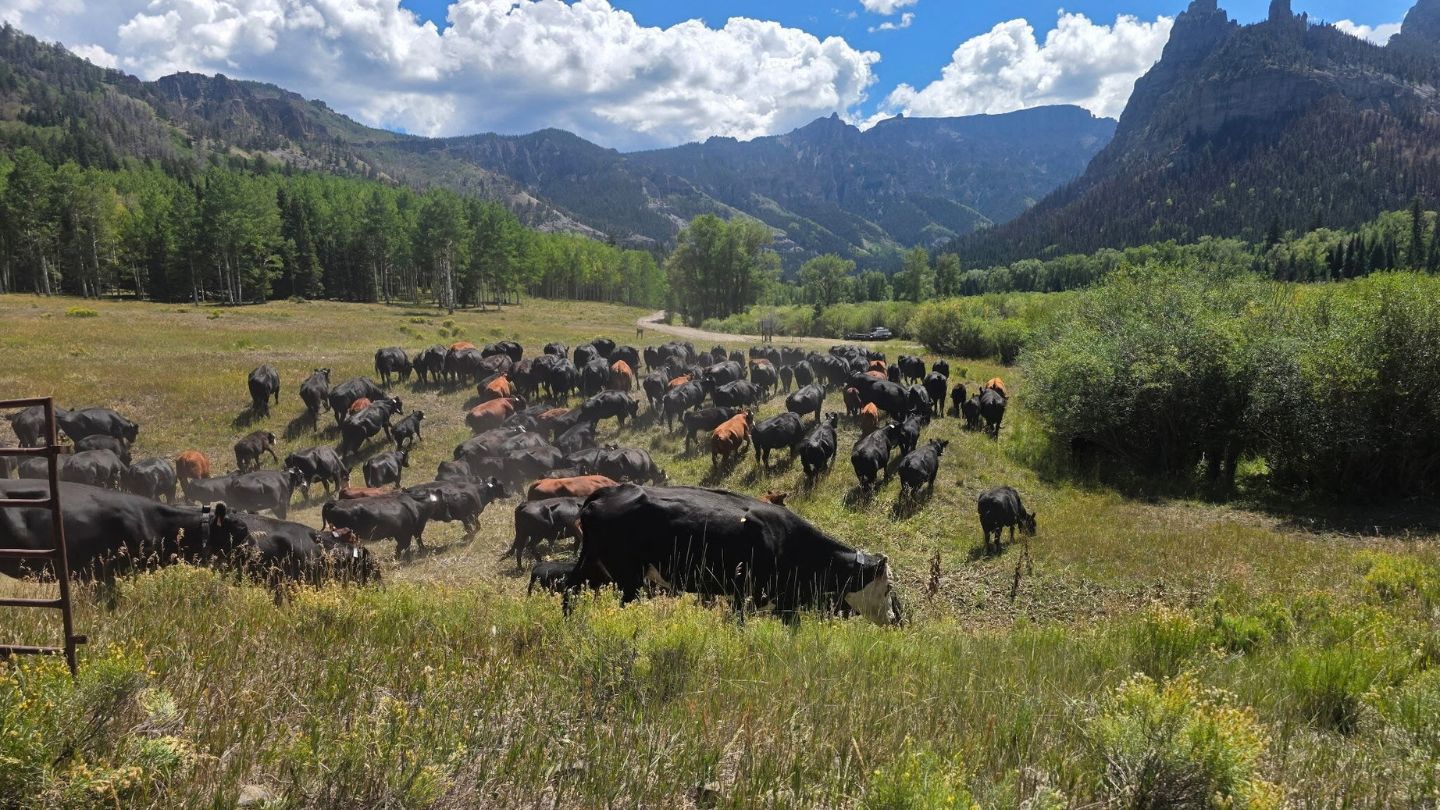
When fire commanders try to figure out how to contain a major wildfire, the last thing you might expect them to deploy is a herd of beef cattle. But on the recent Gold Mountain Fire in western Colorado, cows are eating the “fine fuels” along a three-mile fire line on the Big Cimarron River.
Putting that idea into practice five years ago would have required miles of electric fencing and a range rider to gather strays. Now, new technology has changed the game for cattle grazing by putting electronic collars — all solar-powered — on cows and linking them by satellite.
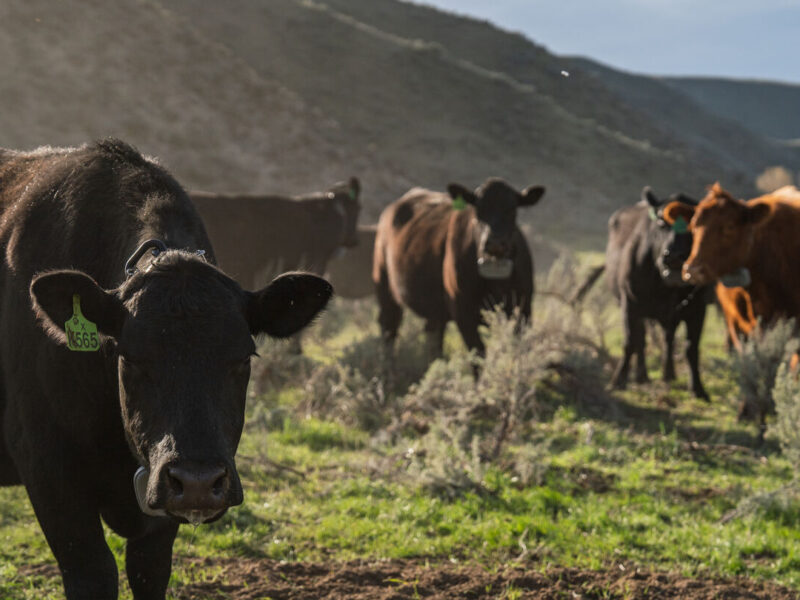
“The Halter Collar is similar to a dog collar, has a tone, vibrate and a shock,” explained Mike Higuera, agricultural manager of Western States Ranches, based in Eckert, Colorado. An app on a smartphone allows range riders to draw electronic fences and track each cow by GPS.
“Gathering cattle in fall used to take four or more weeks and hundreds of person hours, but now it’s a few days,” said Higuera.
The idea for using cows to help contain wildfire came from Sean Brown, a 23-year veteran of range management at the U.S. Forest Service, who pulls in overtime organizing logistics for major forest fires near his base in Montrose, Colorado. He said he and the fire commanders realized that cattle would offer a safer way than setting a hazardous back burn to add to an “indirect” fire line, one away from direct flames.
Once Brown had permission from his bosses, he called Tyler Westhoff, Western States Ranches ranch manager. Westhoff quickly agreed to bring 350 radio-collared cows onto the fringes of the fire zone, which at that point, in mid-August, was 87% contained.
“Tyler flew into action,” Brown said. It turned out that Higuera and Westhoff were relieved to put cows onto their Big Cimarron federal grazing permit. “We’d been trucking water on another permit on the Uncompahgre Plateau, but this is better feed and good water,” said Higuera, who stressed that fire officials were ready to remove the cows if fire conditions turned ugly.
Brown said equipping the cows electronically gave him confidence that they could eat their way to an expanded fire line. This would reduce the burden on fire crews trying to keep the 39,000-acre fire contained until a season-ending event, typically rain or snow.
Westhoff loves what he calls the “Big Cim” grazing permit: “The top of it goes from 8,800 up to 12,000 feet. It’s northern San Juans and a prime grazing permit.” Best of all, he added, “There’s lots of grass.”
Brown took me on a Big Cim tour five days after the herd went to work. Standing in a field where tall grasses were now three inches tall, he explained that cattle are typically kept off burned permits for two years. Nature comes back, Brown said, but without constant herding cattle can move into sensitive areas and exacerbate erosion.
“We’ll have this herd in the Cimarron Valley next year, and fire-affected areas will be excluded with a virtual fence.”
The wildfire work on the Big Cim is good news for Western States Ranches, which was having a dismal summer. The Gold Mountain Fire started near the tourist town of Ouray, quickly roared across the ranch’s Owl Creek permit outside Ridgway, and traveled 26 miles onto the ranch’s Big Cimarron permit.
“We felt like we had a target on our back,” Higuera said. “We were geared to release cattle above Ridgway, then four days later our evacuated cow camp was in flames.”
What does an electronic Halter Collar cost? The leased equipment costs $96 per cow per season. “But for sprawling operations, when you add up person hours, diesel, and trucking water, a Halter pays for itself quickly,” Higuera said.
The collars have other uses besides wildfire work, especially for weed control. Often the first grasses to return after a burn are cheatgrass, which grows quickly in spring and then dries to become highly flammable. “But cows love it,” Westhoff said, “and on lower elevation permits, we’ve made it through a couple winters on cheatgrass.”
The ranchers said they were grateful to Brown and fire commanders for letting the cows perform. “Typically, there’s a risk aversion in the agency… but we showed we can be part of the solution,” Higuera said.
As for Brown, he said that sending in cows to expand a fire line was unique: “Never in my 23 years have I ever done something like this.”
Dave Marston is publisher of Writers on the Range, an independent nonprofit dedicated to spurring lively conversation about the West. He lives in Durango, Colorado.
featured image: haltered cows working the fire line Big Cimarron, Tyler Westhoff photo
This post was originally published in Writers on the Range and is republished here with permission.