On the Ground at J Lazy S: Seeing Virtual Fencing in Action
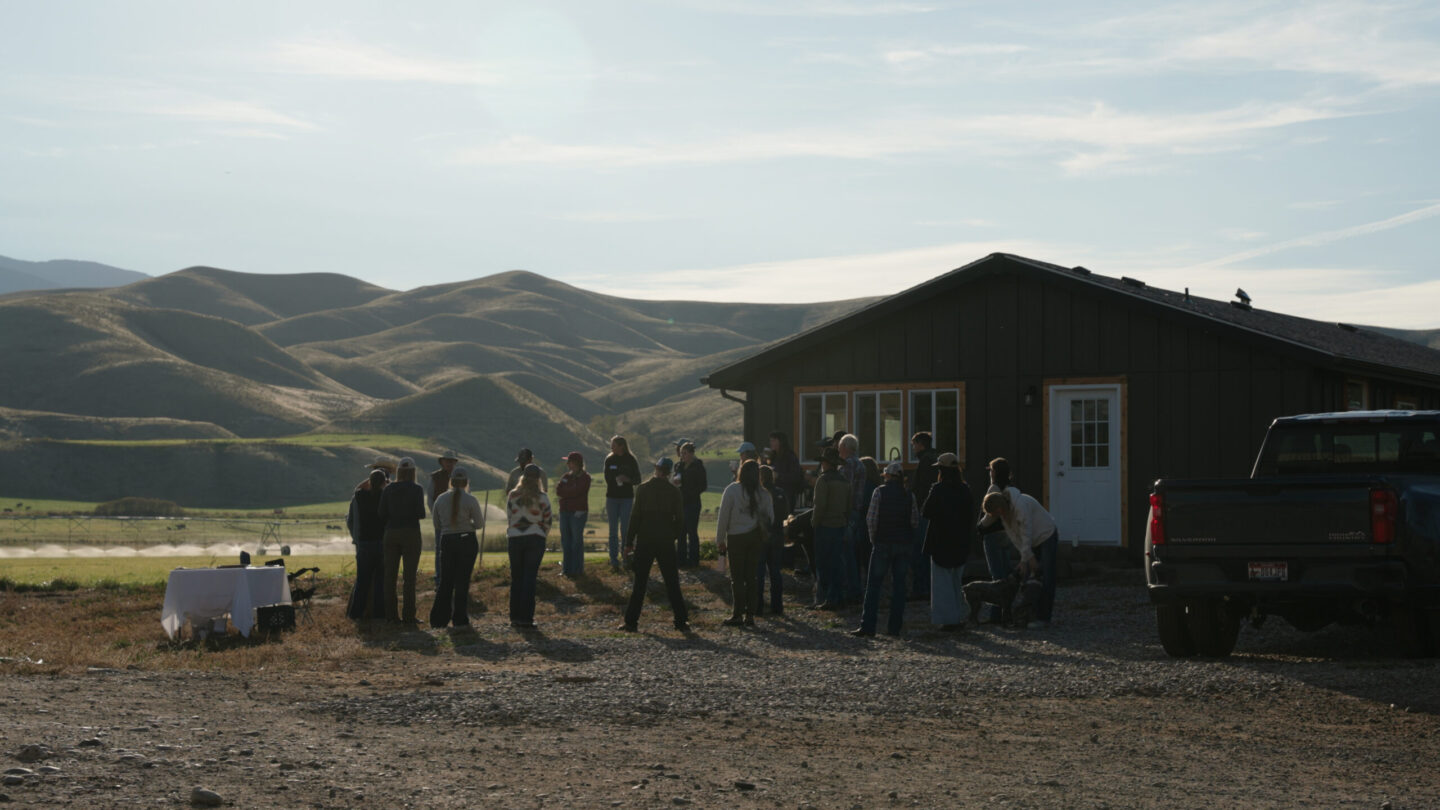
CARMEN, Idaho — On October 2, landowners, ranchers, agency and nonprofit partners, and community members gathered at J Lazy S Angus Ranch in Carmen, Idaho, to see how the Smith family uses technology, conservation partnerships, and adaptive management to respond to some of the challenges facing working lands today.
Hosted by Western Landowners Alliance, the field tour offered participants a firsthand look at the ranch’s virtual fencing system, post-fire grazing management, forest management, and other stewardship practices.
For Jay and Chyenne Smith, these aren’t separate conservation projects. They are tools that help the family keep their ranch productive while responding to a constantly changing landscape.
The Smiths purchased J Lazy S in 2006 and have built a cow-calf and registered Angus operation across private and leased lands, including BLM and Forest Service allotments. Their experience with virtual fencing began after one of the most disruptive events the ranch had ever faced.
In 2022, the Moose Fire burned more than 130,000 acres across the Salmon-Challis National Forest, including a portion of the Smiths’ Forest Service grazing allotment. The fire left the family facing a difficult question: how could they continue to graze the portions of the landscape that remained healthy while giving severely burned areas the time they needed to recover?
They answered by partnering with a diverse group of agency and NGO partners to test virtual fencing at a scale never attempted before.
Rather than relying on miles of physical fence to determine where cattle could graze, GPS-enabled collars allowed the Smiths to create virtual boundaries and guide cattle away from areas that needed additional recovery.
Chyenne explained that the technology initially made it possible to keep cattle on the portions of their range that had not burned without undertaking a massive fencing project or creating additional administrative burden. But the benefits extended well beyond post-fire recovery.
Before virtual fencing, cattle naturally returned to familiar areas, water sources, or preferred forage. That meant some portions of the range received more grazing pressure while other areas went underutilized.
With GPS-enabled collars, the Smiths could be much more deliberate about where cattle spent their time. “In the past, you couldn’t ride hard enough to keep some of those cows from going too soon or coming back,” Chyenne Smith said. “You would have a vast chunk of the mountain that a lot of those cows just skipped. Now we are using that middle section that they were skipping and getting good utilization out of that, but still being well within standards, still practicing good range management.”
University of Idaho researchers found that in 2023, the Smiths’ use of virtual fencing was associated with increased recovery on their allotment compared with other areas. The Forest Service subsequently allowed the Smiths to return to full stocking capacity the following season.
What began as a solution to post-wildfire recovery is leading to other benefits as well. “Even just at today’s event, we had some pretty serious conversations about [removing some fences] that we don’t need anymore,” Jay shared during the event. “It’ll open up some wildlife corridors. It’ll be a real win-win. It’ll be less fence for us to manage, less obstacles for the wildlife.”
Seeing the system firsthand
For participants at the October field tour, one of the most valuable parts of the day was the opportunity to move beyond talking about virtual fencing and see how the system actually fits into day-to-day ranch management.
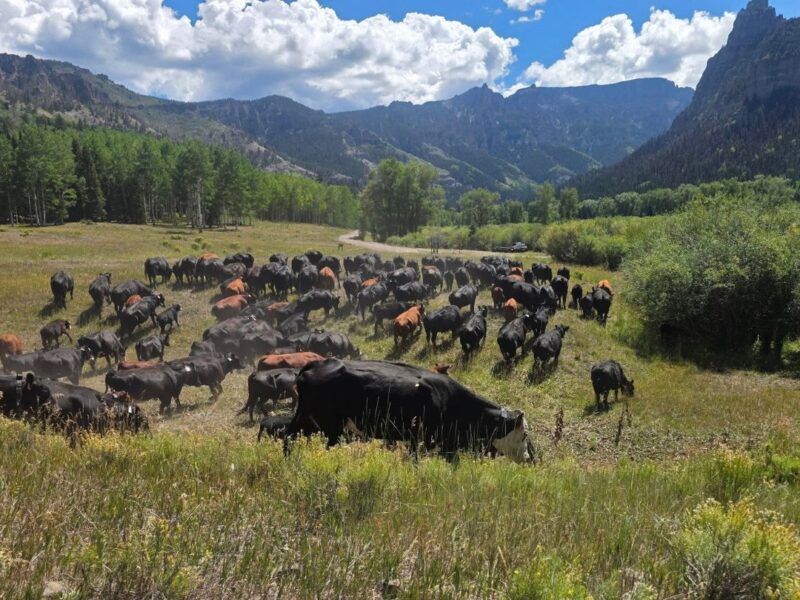
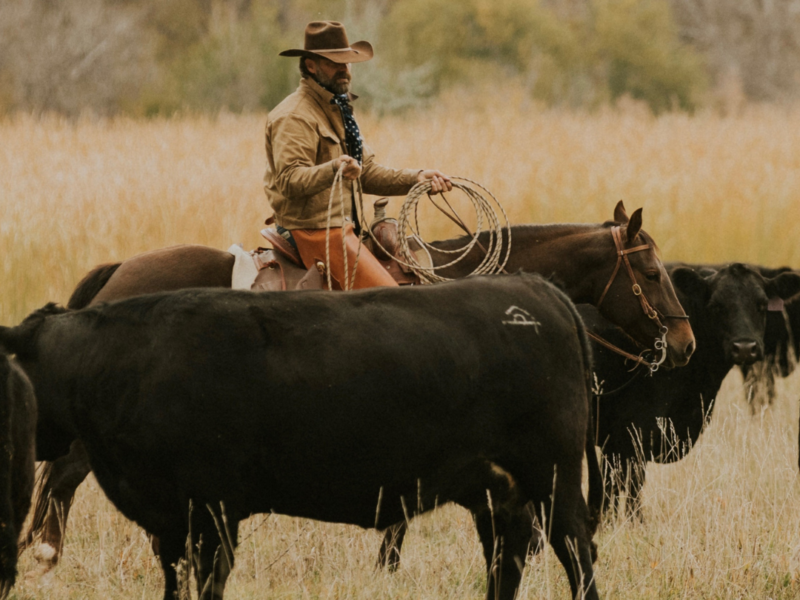
As attendees drove into ranch headquarters, they were greeted by the Smiths’ mother cow herd, each fitted with a Vence collar and most with a fresh calf in tow, because the Smiths have recently switched from winter to fall calving.
Tour attendees could see the collared animals up close and personal, and for many, this was their first time seeing collared cattle and viewing virtual fencing in action.
The calving shift was a hot topic that day, and Jay shared that this transition has saved them countless staffing and hired hand hours. He explained that winter calving took four ranch hands working 24/7 for multiple weeks at a time to keep an eye on the herd and ensure that the calves wouldn’t freeze. Now, they’re able to calve at a much more favorable time of year and have greatly cut back staffing costs.
Despite the savings, it’s important to note that the technology does not replace ranchers’ work. Instead, it gives them another tool for making decisions across a large and complicated landscape. The Smiths’ experience also shows how technology becomes more useful as producers learn what it can do.
Jay has previously described how the GPS data gave the family an entirely new window into cattle behavior.
“My family has run cattle on this land for over 100 years, and we learned more in a couple of months about their behavior than we’d learned in 100 years because we could track them in real time and see where they were actually going,” he said. “It was fascinating. Still is fascinating.”
That information has also helped the Smiths better understand predator-livestock interactions and manage their range-riding time more efficiently.
Conservation beyond the virtual fence
Virtual fencing was only one part of what participants saw at J Lazy S.
The Smiths are also in close partnership with the Forest Service, who are busy at work managing forested portions of the Smiths’ grazing allotment through selective timber harvest and other practices intended to improve the health and resilience of the landscape.
For the second portion of the field day, attendees piled into ranch vehicles and drove up the mountain to check out timber harvest work taking place about 30 minutes from ranch HQ. The caravan made a quick stop at an incredible vista overlooking the entire Salmon valley: a view that took in areas that have been treated for cheatgrass and other invasive species.
The next stop brought the group to a large log deck of timber selectively harvested from forested ground adjacent to the Moose Fire burn scar. The thinning operation, managed by the U.S. Forest Service, was designed to improve forest health and resilience to wildfire by reducing tree density and the buildup of hazardous fuels. A Forest Service representative explained that projects like this can also create safer positions from which wildland firefighters can respond to future fires.
The harvested timber was ready for transport to a mill in Deer Lodge, Montana, but rising diesel costs meant the logs were temporarily sitting at the site until transportation became economically viable. The delay offered a reminder that forest management involves more than completing work on the ground. Getting harvested timber to market is also part of the equation.
Together, these projects reflect a practical, adaptive approach to ranching. The goal isn’t to separate production from conservation, but to find management strategies that allow the two to work together.
That approach has depended heavily on partnerships.
“What I’ve found in the last several years is there’s almost no such thing as a project too big,” said Jay during the event. “If you know the right people and have the right contacts, it’s pretty amazing what you can accomplish.”
The Smiths have worked with Western Landowners Alliance, the University of Idaho, the Natural Resources Conservation Service, the U.S. Forest Service, the Bureau of Land Management, the Idaho Cattle Association, the Idaho State Department of Agriculture, and countless others.
“J Lazy S is a great example of what’s possible when landowners, agency partners, and researchers work together to find practical solutions for working lands,” said Lane Justus, Idaho Resource Coordinator at Western Landowners Alliance. “Getting out on the ground and seeing these projects firsthand helps people understand how stewardship, ranching, and landscape resilience can go hand in hand.”
The Smiths’ experience shows what can happen when ranchers have the flexibility to experiment, when researchers are willing to test new ideas on working landscapes, and when agencies and conservation organizations work alongside producers to find solutions that fit the realities of the land.
“None of this would have been possible without the initial partnership with the U of I and the cooperation of the local FS and BLM,” Chyenne Smith said. “Additional partnerships formed quickly from there with the Idaho Cattle Association, ISDA, and our cherished friends at WLA.”