Grazing is an essential tool in the quest to manage forests and grasslands for the benefit of people and wildlife. Our nation relies, in part, on the food and fiber produced on public lands. Yet the propriety of public land grazing has been a source of debate for decades. Many public lands have been degraded over the past 150 years from overgrazing. At the same time rigid grazing regulations have limited the ability to respond to variable conditions like drought, wildfire, and shifting forage availability.
This lack of flexibility has prevented timely management responses that would otherwise improve overall rangeland health. Administrative complexity has created an environment where permittees are often hesitant to adjust stocking levels for fear of unintended consequences, lawsuits, and permanent loss of AUMs. Delays in permit renewals, barriers to range improvements, and the inability to adjust grazing times within a permit are just a few examples that have hindered good management of public resources.
Grazing reforms are needed to address these longstanding challenges, particularly in ways that maintain and improve land health. Policies that support good stewardship of public land grazing are also critical to maintaining year-round forage across both public and private lands. When operations go under, society at large loses the ecosystem services that private lands provide like open space, wildlife habitat, and more.
For decades, there has been broad and growing support among livestock producers, rangeland managers, and many conservationists for more adaptive management. The science of rangeland management continues to evolve, with increasing recognition that these landscapes function as complex social-ecological systems shaped by climate variability, land use, and human decision-making. Policy must evolve alongside that understanding.
The Western Landowners Alliance (WLA) has been working with a wide range of both environmental and agricultural organizations to develop recommendations that strike the right balance between flexibility and accountability. Creating clear, measurable, and transparent mechanisms that encourage adaptive management without putting AUMs at risk is important.
Big changes are already underway at the Departments of Interior and Agriculture aimed at improving grazing on public lands. From Memorandums of Understanding improving grazing coordination to major NEPA reforms and clearer guidance on categorical exclusions, there is a lot happening.
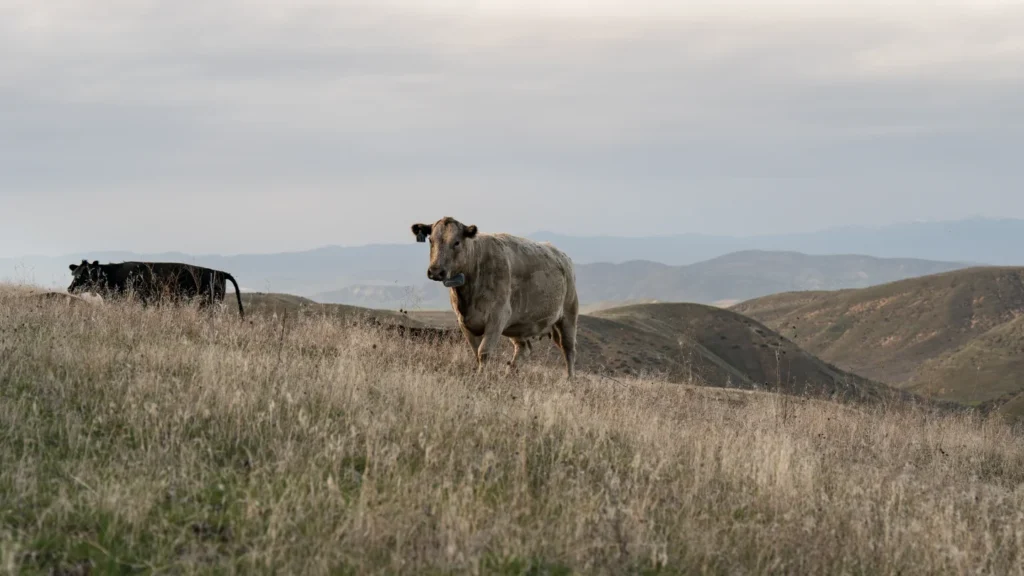
A New Grazing MOU Between the Forest Service and BLM
Recently, USDA and Interior secretaries signed a Memorandum of Understanding titled, Advancing Grazing on Forest Service and BLM Lands. The agreement establishes a framework for stronger coordination between the agencies that addresses many of the operational and regulatory challenges facing grazing permittees. The MOU builds off the agency’s Beef Action Plan, where the USDA outlines a strategy to rebuild the herd.
The MOU memorializes some of the priorities raised by WLA, including increasing flexibility through Outcome Based Grazing, improving coordination and partnerships by expanding Good Neighbor Authorities (GNA), increasing landowner engagement, and reducing administrative barriers posed by NEPA However, missing from the MOU is a focus on conservation and the importance of stewarding these public natural resources. Grazing is, after all, an important tool in that endeavor. Despite the limited emphasis on conservation outcomes, WLA is encouraged by some of the directives in the MOU.
“Permittees seeking to improve rangeland health have long been frustrated by outdated and inflexible management prescriptions,” said Lesli Allison, CEO of WLA. “Rules and accountability are absolutely essential but so is adaptive management that takes into account a living, dynamic system. The science of rangeland management is continually evolving, along with practice standards and natural resource priorities. Current rules and threats of litigation undermine producers’ ability to adapt, innovate and collaborate.”
Expansion of Outcome-based grazing
Outcome-based grazing is one example that focuses on achieving ecological and operational outcomes in collaboration with public land managers. Instead of locking producers into fixed grazing dates, numbers, or rotations, it builds in pre-approved flexibility so operators can adjust timing, livestock numbers, or pasture use, to meet mutually agreed upon goals. The result is a more adaptive and collaborative system that supports both healthy landscapes and economically viable ranching operations. WLA applauds the expansion of outcome-based grazing on public lands by the MOU.
Expansion of Good Neighbor Agreements
The MOU also expands the use of Shared Stewardship and GNA agreements to promote better public-private partnership and interagency cooperation. These agreements improve coordination between federal and state agencies. For example, the Idaho Department of Lands has implemented one of the most robust GNA programs in the country, completing timber sales, fuels reduction, and restoration projects on national forests used for grazing. Revenue from timber sales is reinvested into additional restoration work.
No Net Loss of AUMs
The MOU makes maintaining grazing capacity a priority by avoiding unnecessary reductions in AUMs. The agency has launched a beta site that shows vacant allotments that allow grazing and haying on BLM, FS, and National Wildlife Refuges, making it easier for new and existing producers to learn about available resources.
While the MOU has a goal of maintaining zero loss of AUMs, that objective should be balanced with the need for flexibility and strategic reserve capacity on vacant allotments to support adaptive and targeted management during drought, wildfire, and other variable conditions. Weather and climate may prevent the ability to fully stock some allotments in dry years, and it is important to have allotments available for permittees to go to during drought or wildfires.
Ensuring grazing remains as a tool on public lands is important. However, a goal of fully restocking all vacant allotments warrants further consideration. In general, the agencies should consider, on a case-by-case basis, the condition and circumstances of vacant allotments. Rather than reissuing vacant allotments to new permittees, vacant allotments may be better utilized as a ‘spare’ or ‘grassbank’ allotments for adjacent or other permittees in times of drought or fire.
Improved Coordination and Communication
Finally, the MOU advances better interagency coordination between agencies and permittees. Provisions improve data sharing, align management across jurisdictions, and directives to investment in infrastructure like virtual fencing. New technologies like virtual fencing help target grazing and better information sharing support more consistent, landscape-scale management. The agreement’s commitment to collaboration, including roundtables, reinforces WLA’s emphasis on incorporating local knowledge and building trust between agencies and producers.
NEPA Efficiencies
In addition to the MOU, the agencies are making serious commitments that streamline NEPA processes and expedite decisions during emergencies, such as wildfire. Some of these build on the Final NEPA Rule and revised handbook issued by Interior in February and is reiterated in the MOU.
The rule rescinded roughly 80% of Interior’s prior NEPA regulations in the Code of Federal Regulations and shifted them into the guidance handbook. NEPA procedures are now primarily in an internal DOI NEPA Handbook. This means less litigation tied to procedural compliance and more focus on the merits and outcomes of management decisions. While livestock producers and conservationists alike have agreed that some level of NEPA reform is needed to improve the management of public lands, some stakeholders may view these changes as reducing regulatory safeguards or as an end run around established compliance processes.
The agency has also provided guidance to staff when NEPA is required and when it is not. For example, when there is an existing environmental assessment (EA) or environmental impact statement (EIS) for rangeland improvements, fuels management, or targeted grazing/prescribed grazing—including a programmatic EA or EIS—staff are directed to prepare an EA that tiers to or incorporates the prior NEPA analysis or, where appropriate, to complete a Determination of NEPA Adequacy. This means field staff, like range conservationists, have more time in the field and less time behind a desk preparing redundant NEPA documentation for analyses that have already been completed, and ultimately fewer delays in rangeland improvement projects.
Clarity for Categorical Exclusions
The agency has also included guidance for agency staff for activities that qualify for categorical exclusions (CE). Range improvements that enhance allotment conditions or livestock distribution qualify for CE. Such improvements include linear fuel breaks, rebuilding fences, adding stock water facilities to existing systems, spot seeding native grasses, applying soil amendments, using temporary corrals and water troughs, installing above-ground pipelines, and maintaining or replacing existing infrastructure, provided these actions have minimal environmental impact and do not impede wildlife movement or water flow.
“Range conditions, wildlife movement, and precipitation are highly variable annually on our BLM allotments. Permit frameworks should be flexible enough to allow activities that support long-term rangeland health, wildlife abundance, and operational stability. Often, small beneficial changes such as fence adjustments, annual pasture on/off dates or water availability measures are deferred indefinitely due to the NEPA burden and staff shortages,” said Idaho rancher Tom Page.
Continued Challenges for the Agencies
Despite these reforms and clear direction to improve grazing on public lands, agencies still face significant challenges in implementing these directives on the ground and in practice. Staff capacity constraints, federal budget limitations, and agency disruptions, such as the Forest Service reorganization from Washington, D.C. to Utah will undoubtedly make progress in some areas difficult. And still ahead are the regulatory changes to Interior’s grazing regulations, which will be critical to watch
Overall, these reforms have the potential to help permittees make more timely and effective management decisions that improve rangeland health. Getting grazing policy right will be essential to ensuring that public lands continue to support both ecological resilience and productive agriculture for the long term, benefiting not only producers, but the landscapes and communities that depend on them.