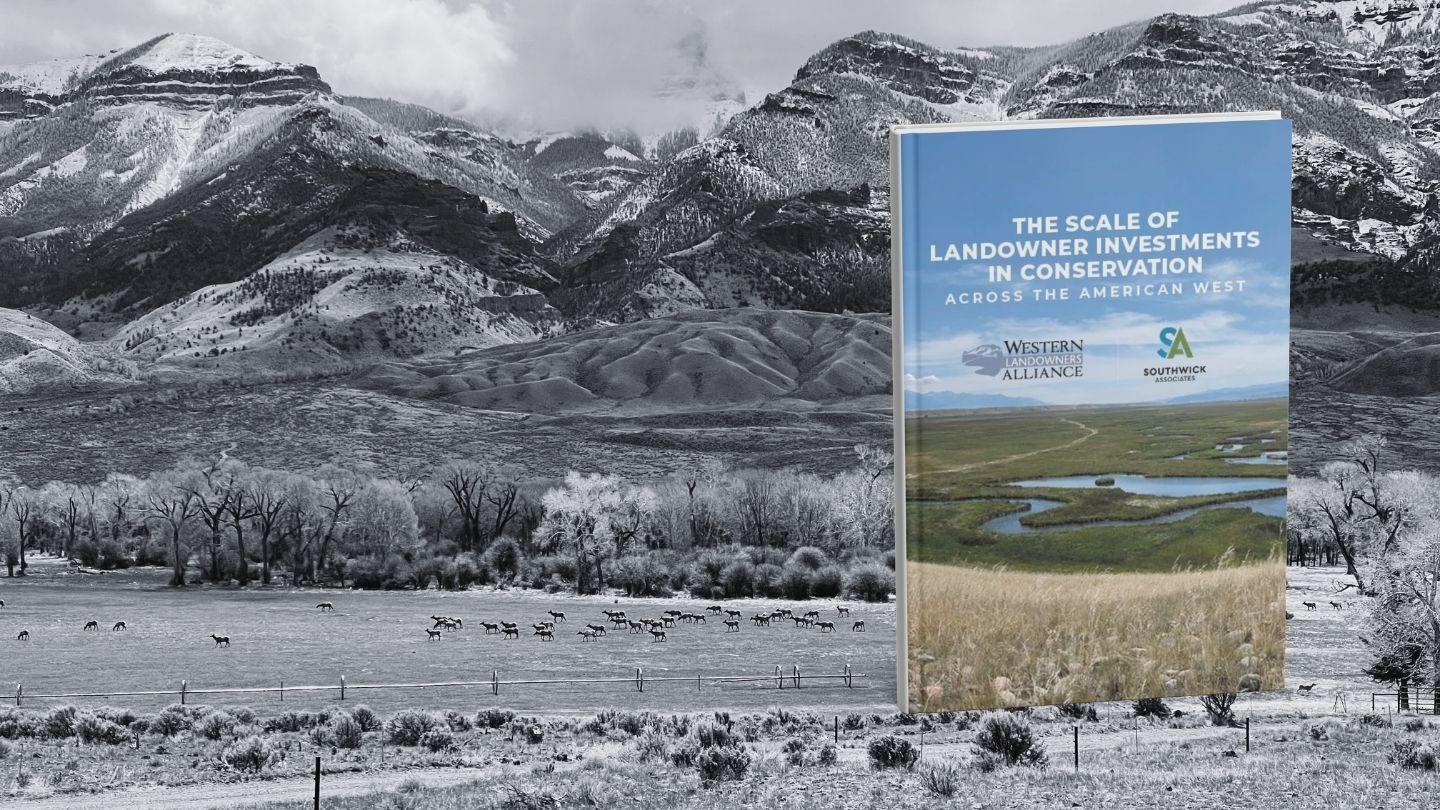
The Scale of Landowner Investments in Conservation Across the American West
Preface
From Yellowstone’s geysers and grizzly bears to the red rock canyons of the Southwest, the public lands of the American West occupy a powerful place in our national identity. They are icons of shared heritage and the birthplace of the modern conservation movement.
But these celebrated landscapes tell only part of the story.
Across the 11 Western states, national parks occupy less than 3% of the land. Even when national forests, Bureau of Land Management lands, and other public holdings are included, public lands make up less than half of the region’s land base. Tribal lands account for roughly 6%. Nearly half of the West—millions of acres that connect, buffer, and sustain public lands—is privately owned.
These private lands are the backbone of the Western landscape. Held open through generations of investment, labor, and care by private landowners, they provide essential ecological services, support agricultural production, and offer recreational opportunity. They sustain rural livelihoods and local economies. They maintain connectivity between public lands, supplying critical habitat and migratory corridors for the West’s iconic elk, deer, pronghorn, and other big game species. For a majority of threatened and endangered species, private lands provide irreplaceable, lifesaving refuge.
Yet the significance of these lands—and the contributions of the landowners who steward them—largely remains out of public view. So, too, do the ways landowners support the civic and economic life of rural communities. Landowners pay taxes on land, livestock, buildings, and equipment that fund local roads and public services. They create and sustain jobs and local businesses. Grazing fees on intermingled state trust lands help support public schools. They serve on school boards and library boards, county commissions, volunteer fire departments, and emergency medical teams, anchoring the social fabric of rural places.
This report begins with a simple but often overlooked reality: Private landowners are not peripheral to conservation in the American West, they are central to it. Their day-to-day management decisions, substantial out-of-pocket investments, and long-term stewardship shape the health of landscapes that sustain wildlife, water, food production, and rural communities alike. By making these investments visible and by understanding their scale, purpose, and public benefit, we can better recognize the true foundation of conservation across the Western landscape. In turn, this understanding can strengthen relationships, improve collaboration, inform more effective public policy, and lead to better outcomes for both people and wildlife.
– Lesli Allison, Chief Executive Officer
Western Landowners Alliance
Continue reading the report at westernlandowners.org/landowner-investment/