Cade Rensink: Fire is an investment in healthy prairie
Marty Robbins’s “Prairie Fire,” a rollicking, anxious country ballad, describes the fear these huge blazes struck into the hearts of cowboys: fires so big they went from horizon to horizon. For a long while, they were seen with that same fear in Kansas’s Smoky Hills.
But here in north-central Kansas, fire is becoming more common—and less-feared—because of folks like Cade Rensink.
“It’s important to illustrate first that in my area of the state, to be real frank, prescribed fire has not been in the culture,” Rensink said. That’s for understandable reasons. This part of Kansas is significantly drier than the Flint Hills to the east, where a recent “Fire Culture” film series was set. That moisture difference meant prescribed fire was not widely practiced by ranchers in the area, even though it had been a frequent part of the ecology before Anglo-American settlement.
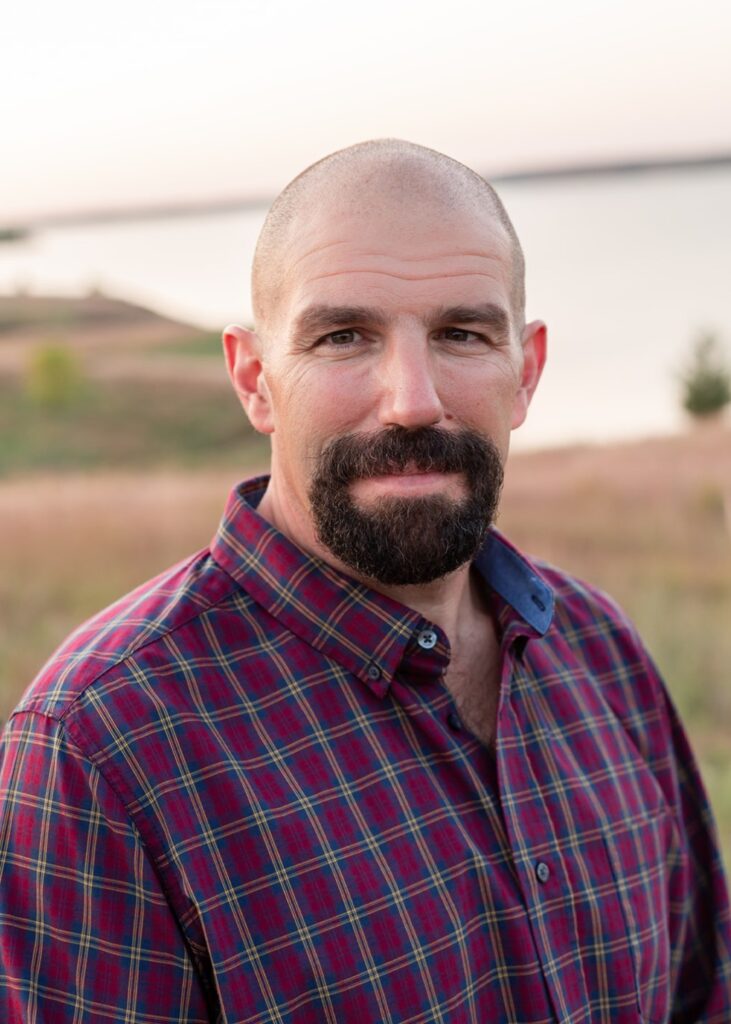
“When I was a kid, on our rangelands or grazing pastures we didn’t really do any prescribed fire,” he said, “My family has always been diligent with invasive species control, so we didn’t have any reason to use prescribed fire.”
Nowadays, Rensink is also district director for Kansas State Extension even as he manages his family’s place. “This is just my day gig,” he said of the extension role. “I consider myself more than a half-time rancher.”
Since Rensink’s boyhood days, woody encroachment by eastern red cedar and broadleaf trees has made the mechanical and hand-pulling parts of invasive species control more and more time-consuming. Fire turned out to be the answer.
His family began working with prescribed fire following their enrollment in the Conservation Reserve Program. The management plan for the Rensink’s enrolled acres included regular prescribed burns to benefit reseeded native grasses.
“Within the past 5 years, there’s been much more attention given to that woody encroachment, and prescribed fire on the landscape has really ramped up in the area from that standpoint,” Rensink said.
The Cost of Prairie Care
And how much does it cost?
“The good old economics answer is it depends,” said Rensink. “It depends a lot on the landscape itself, if you have steep terrain with volatile fuels, if you need lot of equipment, management, labor.” Those burns will be significantly more expensive per acre than burns on flatter, less complex landscapes.
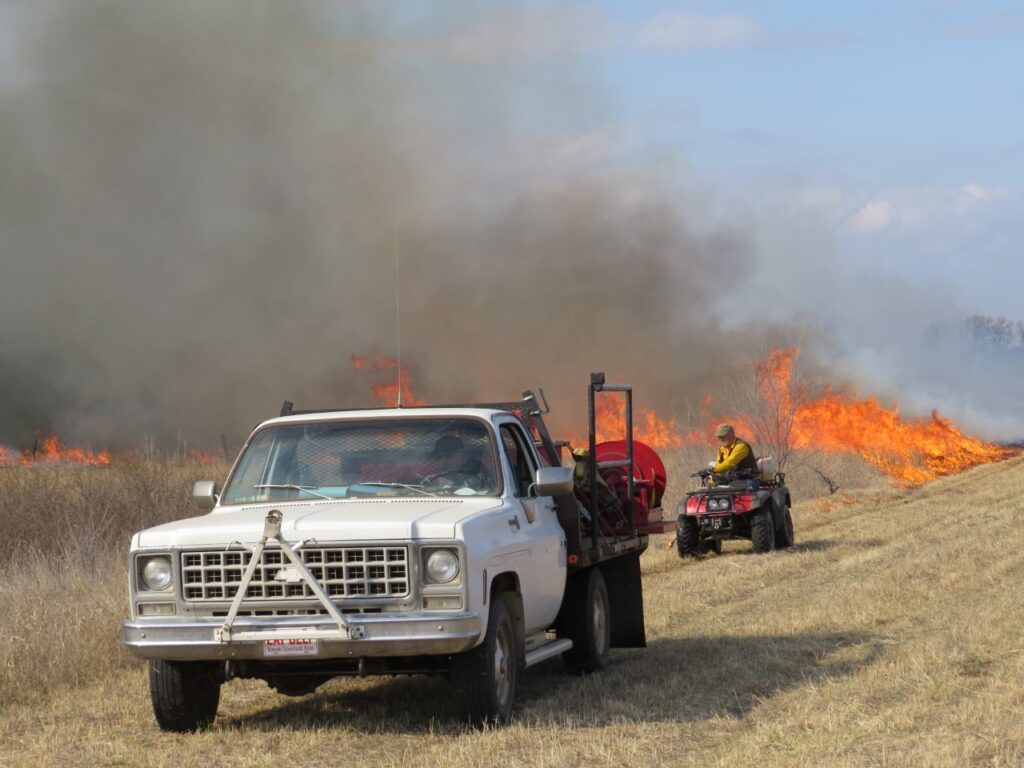
Generally, the cost per acre does decrease with scale. Rensink estimates that most burns will be somewhere in the $10-$20 per acre range, with smaller acreages costing more per unit, somewhere in the $30-$40 range. In the Smoky Hills, average individual pasture size runs from 80-320 acres, with 640-1,000-plus acre pastures being rare. A fire on sub-80 acres of pasture would incur that added cost.
Generally, the cost per acre does decrease with scale. Rensink estimates that most burns will be somewhere in the $10-$20 per acre range, with smaller acreages costing more per unit, somewhere in the $30-$40 range. In the Smoky Hills, average individual pasture size runs from 80-320 acres, with 640-1,000-plus acre pastures being rare. A fire on sub-80 acres of pasture would incur that added cost.
“If we can burn an individual 640+ acre pasture or are able to work with neighbors to put together several adjoining tracts totaling 640+ acres, we can get the per acre cost down to $5-10/acre including firebreaks. In bigger country like the Flint Hills, they can do 5,000-10,000 acres in one shot and likely have a cost of a buck or less an acre,” Rensink wrote in an email.
The producer using the pasture is generally responsible for all costs of the fire out-of-pocket, Rensink said, but landowners and producers renting pasture come to agreements regularly on splitting costs. Financial assistance can also come into the picture under the aegis of the NRCS Environmental Quality Incentives Program, which can help offset costs.
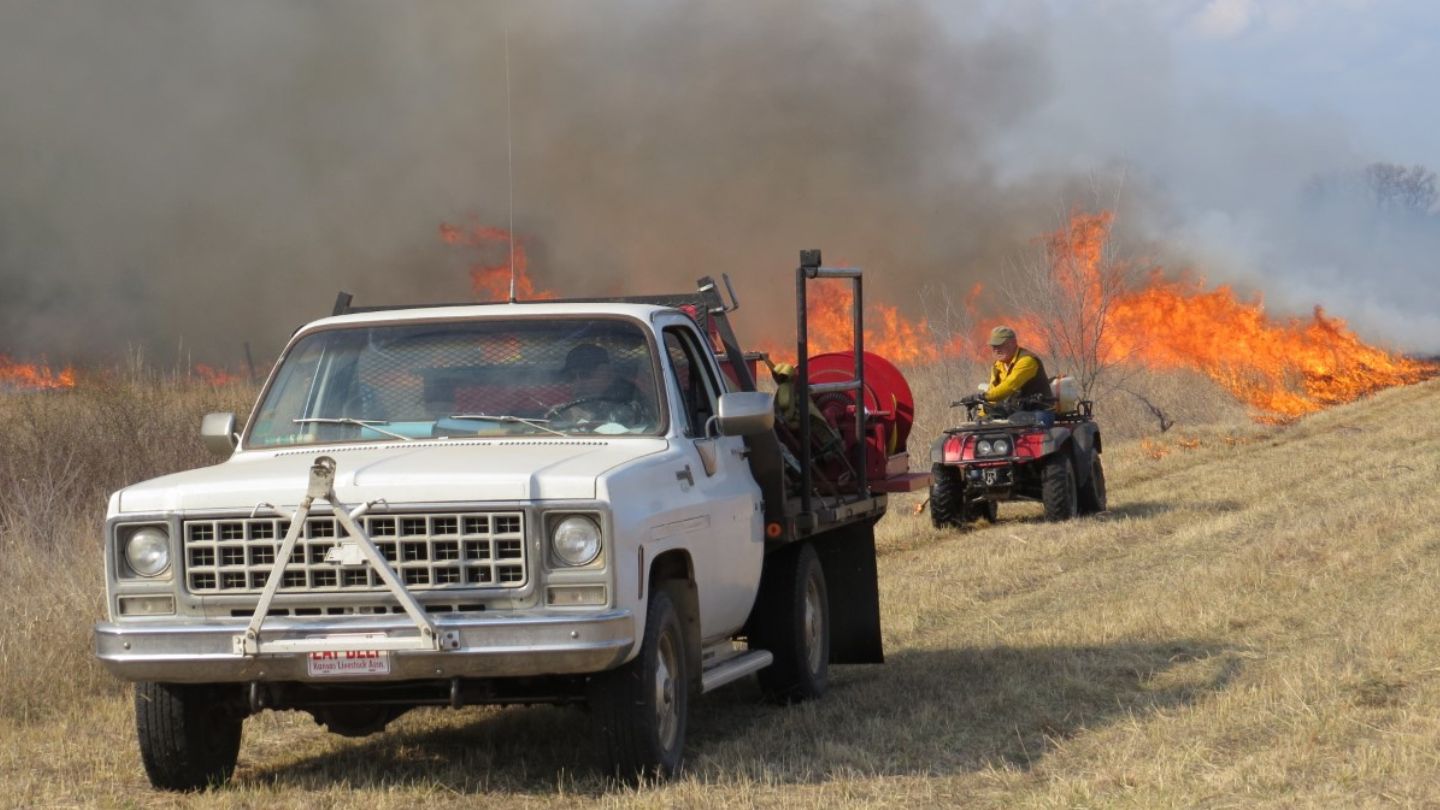
While the costs can be high for one rancher to burn a large parcel, Rensink said prescribed burn associations in Kansas are great opportunities for producers to share costs.
“These are groups that formalize an organization that can own equipment, share labor, offer education and training, seek out grant funding, and provide communal resources for burns,” he said, “They share the equipment, the labor, and they will participate and come and help you.”
These associations can cut costs in half, he estimated, and that can make a world of difference when putting money into the land. With Rensink’s help, ranchers in the Smoky Hills are restoring a keystone ecological process to the prairie, and making their investment in the land worth all the hard work.