As wolves and grizzly bears continue to recover across the American West, livestock producers are navigating renewed challenges of sharing the landscape with large carnivores. Among the carnivore-livestock conflict reduction measures gaining traction is range riding, which is essentially the use of human presence on the landscape to deter carnivores and monitor livestock. Despite its growing adoption, little research has examined how range riding is practiced, how well it works, and what it takes to sustain these programs over time.
A recent paper in Frontiers in Conservation Science authored by scientists from multiple institutions including Oregon State University and the USDA Forest Service, addresses this gap, drawing on interviews with range riders and program coordinators in western Montana alongside document analysis and broader regional research. The study finds that range riding is not a one-size-fits-all tool but rather a flexible, context-specific practice rooted in traditional cowboying while adapted to modern conditions. Riders play multiple roles, from deterring carnivores and monitoring herd health to assisting with grazing management, documenting losses for compensation programs, and building trust within rural communities.
Strikingly, the very success of range riding in preventing losses can undermine program funding—a dynamic the authors term the “paradox of prevention.”
– Avery Shawler
Producers and coordinators highlighted clear benefits, including reduced livestock losses and improved communication between landowners, riders, and agencies. Range riding also helps sustain working lands during a period of significant social and economic change in the West. However, the study also points to persistent challenges: limited and uncertain funding, high labor demands, and the difficulty of recruiting and retaining skilled riders who can balance both livestock management and relationship-building responsibilities. Strikingly, the very success of range riding in preventing losses can undermine program funding—a dynamic the authors term the “paradox of prevention.”
For producers across the West, these findings underscore that range riding is more than a short-term experiment; it is a practical, community-centered strategy for balancing the realities of ranching with large carnivore recovery. Yet its continued availability depends on durable funding and supportive policy.
Ultimately, the paper highlights that investing in range riding is investing in the future of large carnivore conservation, working landscapes, and resilient rural communities in the West.
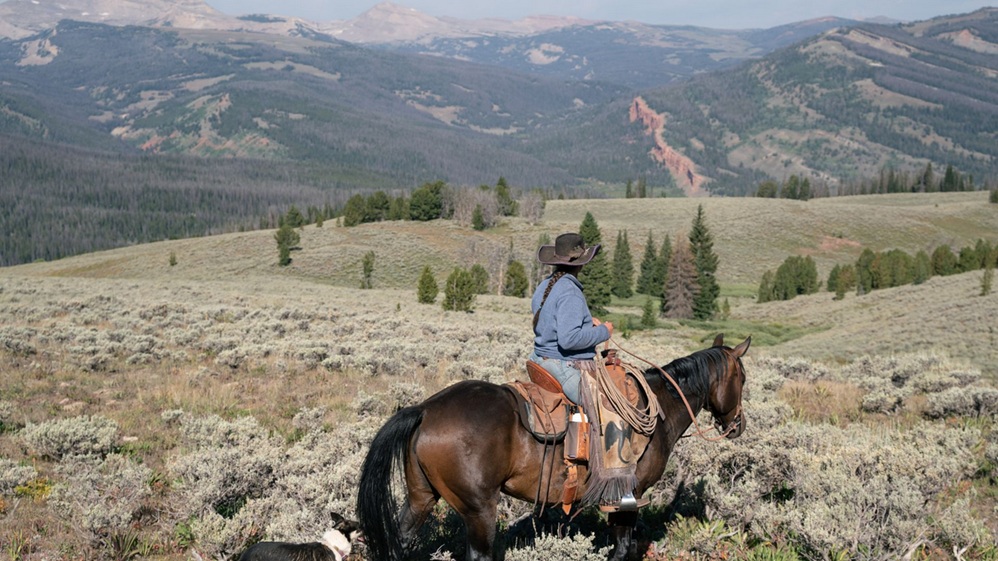
Range Riding in Action
Western Landowners Alliance, Heart of the Rockies Initiative and other organizations are currently advocating to prioritize NRCS funding for range riding, recognizing its essential role in reducing conflict and keeping working lands economically viable.
Check out producer testimonials and more in this ArcGISStory Map