What’s Going on Down There? Satellites, Irrigation, and Science with Perry Cabot
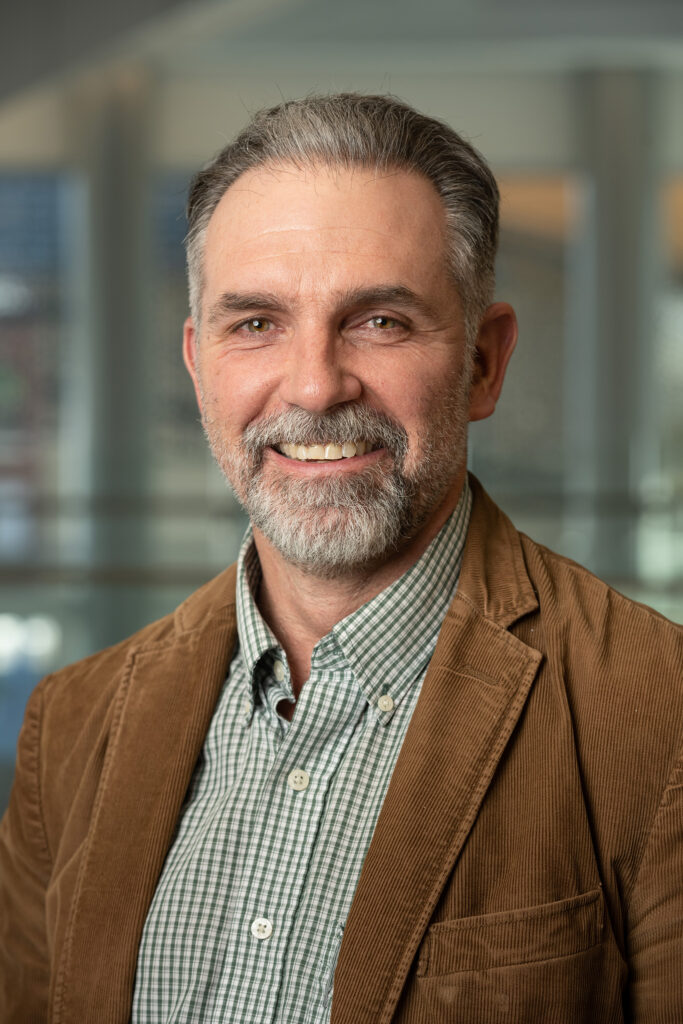
We talk a lot about the importance of knowing the land at Western Landowners Alliance. Walking it, talking it, being in sync with it. Perry Cabot is one of the people Colorado producers can partner with to help them know more exactly what is happening in their fields, because Perry is using cutting-edge science to understand evapotranspiration rates and how farmers and ranchers can adapt to drought in a drier West. Perry is a research professor at Colorado State University Extension, and has spent years learning about the complex interplay between precipitation, irrigation, and plant growth, and came on the On Land, On Water podcast to share his wisdom this episode!
Listen
Links from this episode
Agricultural Irrigation Technologies @ CSU’s Colorado Water Center
Surface Water Conservation Programs: What Are They, and Are They Working?
What Landowners Need to Know about the 2023 Conservation Pilot Program
Transcript
Perry Cabot: [00:00:00] Nobody’s in the dark about this issue on the Colorado River. I mean, there, there’s a well-known lack of water for the amount of demand there is on the river, and that that lack of water is, you know, partly driven by the, you know, the historic context of the compact as well as the fact that every people wanna live in the West and we need to continue to have our agricultural economy survive.
So, you know, nobody’s in the dark about that. And what I’ve generally found is that farmers would rather have information that they don’t necessarily like, but they prefer to know it. it’s just a very pragmatic thing about being a farmer. you don’t wanna hide and say, I don’t, I don’t wanna know that it’s gonna rain tomorrow.
Thomas Plank: We talk a lot about the importance of knowing the land at Western Landowners Alliance, walking it, talking it, being in sync with it. Perry Cabot is one of the people Colorado producers can partner with to help them know [00:01:00] more exactly what is happening in their fields ’cause Perry is using cutting edge science to understand evapotranspiration rates and how farmers and rangers can adapt to drought in a drier.
West Perry is a research professor at Colorado State University Extension. And I spent years learning about the complex interplay between precipitation, irrigation, evapotranspiration and more.
Perry Cabot: My dream was always to come back to Colorado and, and I knew that the kind of work that I wanted to do was gonna be some kind of an applied science.
And so. It happens to be that the Colorado Water Center for, for our, for our land grant University does exactly that. So, you know, we have people and there’s probably a need for more of us that are able to do work that is applied science, but at the same time, um, you know, tries to push the envelope on, irrigation and water science.
So. [00:02:00] That’s how I ended up sort of back in Colorado and, and then I found myself just continuing to drift further west. And, and I won’t lie that, you know, the, the, the people that work on the Colorado River issues, I, I’m fortunate to know a lot of them. They’re just some of the most creative and, you know, determined people that I have ever known.
And it’s just, it’s just amazing to be around people like that, that are. Really trying to solve one of the most seminal issues of our time in this country. And so it’s just, you know, it’s, it’s one of those things, it’s like, it’s a challenging problem. I’m not even gonna say it’s a solvable problem, but it’s a problem that we can adapt to. And it’s just, it’s really rewarding to be in a, in a field of work where you feel like you can have that
Thomas Plank: Yes. And also speaking of pushing the envelope, one of the, the reason we’re I. I shot you. An email was partly about this and then I [00:03:00] learned is there’s a whole lot more to it is irrigation withdrawal programs, which is something that you’ve been working on, you said, for a decade. Um, so as we just discussed, there’s the, you can save water by not using it, and then that goes into a bank in big quotes there.
Big quotes, not a water bank, just a bank.
Perry Cabot: It’s in a way, it’s a bank philosophical
Thomas Plank: Aren’t all banks are philosophical too, so there we go. But, uh, it goes into a bank and then can be moved around based on numbers, estimates, expectations via shepherding. Also big quotes there. But you have been working more specifically with farmers on.
Irrigation withdrawal programs, or I think I called them deficit irrigation. But Perry, I’ll let you take it away. What are these programs and how has your work kind of opened up some different, different vistas for irrigation [00:04:00] in Colorado?
Perry Cabot: Mm-hmm. Well, yeah, to put it simply, an irrigation withdrawal program or. What some of your listeners might, might know to be the, the system conservation pilot programs. These are programs that are fundamentally designed to compensate farmers to forego their irrigation water, and the action of foregoing that irrigation is then presumed to have an effect on.
The evapotranspiration that would’ve occurred on the place where the irrigation was going to happen. So in other words, you’re saying, I have a right to do this. I’m not gonna do that. And so therefore, the, the impact on me is that I’m not going to benefit from what I have the right to do, which is in this case, irrigate.
And, and fundamentally that, that’s just a, there’s, there’s just a block of water or blocks of water that emerge in a, uh, in a. In a sort of record keeping sense, [00:05:00] when you don’t irrigate, they are presumed to exist, uh, in, in, in the either the reservoir or some point of origin. Uh, and because they’re presumed to exist, they’re then presumed to be able to be delivered.
Uh, so why I work on farms is funded is really because that’s where the water is. The, the vast majority of water consumption on the Western slope of Colorado is, is agricultural water consumption for the purpose of producing food and the animal agriculture or hay production for animal agriculture. So if you’re trying to find lots and lots of blocks of water, that’s where you go.
And so the programs that I work with are really intended to figure out how best we can quantify. What these blocks of how much, how big these blocks of water are. So that quantification has to take some form of. Measurement, and this is not [00:06:00] the kind of thing where you, you can’t go out and physically measure this water because it’s exists as vapor.
This is, it’s evaporation, it’s evapotranspiration. So you have to find ways of saying that we are comfortable assigning a certain amount of conservation of water to this participating field. Versus a non-participating field. And that has to take the form of two different measurements that you allow one to be like a reference condition.
And the other one would be the, the sort of, you know, participating condition. And then just to keep things really simple, you essentially argue that you, your reference condition is a sort of a historical consumptive use of that field. And then the action of the irrigation reduction program causes a, a loss of, of.
Consumptive use and so one minus the other is the amount that is then presumed conserved.
***
Thomas Plank: One of the most important topics of discussion at [00:07:00] WLA is the commitment to Landowners working together with their land Programs, like the system conservation pilot program, and others being rolled out in the Colorado River Basin are important because they are voluntary, which gives a level of agency to Landowners as they determine how best to treat their lands.
To understand a little more about this philosophy, I brought on our water director Morgan Wagner, to explain this key concept I.
Hey Morgan, how’s it going?
Morgan Wagoner: Pretty good. How are you?
Thomas Plank: Doing good. So Morgan, Perry and I have been talking about voluntary con or voluntary water conservation programs. Uh, I’m bringing you on as the WLA water director to tell us why voluntary water programs are important and why voluntary is really the catchphrase here.
Morgan Wagoner: Yeah. I think that for landowners it’s really important that they have the opportunity to manage their lands in a way that works for them. And what these [00:08:00] voluntary programs do is they give them the space to figure out how to deal with changing conditions on the ground. And so they can work with their neighbors and they can work with the systems that they have in place in order to remain economically viable and reallya lot of these programs provide a little bit of a buffer, and a transition opportunity for producers to change and adapt to the current system and to the current climate that we are experiencing. Okay.
Thomas Plank: And one good example of this is something that we’ve talked about a lot in the past and in fact we met Perry, uh, as we were discussing this with another partner, which is Western States ranches, uh, the system conservation pilot program. Morgan, can you give us a little bit of background on what the SCPP is as it has been coined and why this program that relies on voluntary access is potentially a way forward for the Colorado River Basin.
Morgan Wagoner: Yeah, so the system [00:09:00] conservation pilot program was a trial program that was implemented in the upper basin, a couple of different times that provided payment for Landowners when they reduced water use. It essentially paid for that water to allow them to implement, practices on the ground and remain economically viable.
Thomas Plank: And it was really just a program to understand if it would effectively save water in the basin. And we did see water savings, from that program and then we’ll have some information on the SCPP background, how much people are getting paid per acre foot, all of that in our show notes, so you can look there for more information on it. And Morgan, you also keyed in on another one of our watch words, which is, well, two of our watch words, which is economic viability.
A lot of the work that Perry’s been doing with agriculture has been both voluntary and also a way [00:10:00] to have farmers and producers be able to adapt to changing conditions, particularly when it comes to the drought in the Colorado River Basin. Could you help me understand and help our listeners understand why economic viability and voluntary are important to WLA, particularly when it comes to the water world.
Morgan Wagoner: Yeah, I mean, I think a lot of it comes back to land managers know their land the best, and so they understand what’s going to work for their land. But the reality is they the private lands provide a lot of ecosystem services and wildlife habitat. For the larger population. And when they can manage lands in a way that both supports their operations as well as those other system ecosystem services that those lands provide, it means that they’re more viable [00:11:00] and that they’re more likely to stay in operation and continue to be able to provide those services.
And so in the basin, what, what we often say is, temporary. Compensated and voluntary. So we want programs that really allow for land managers to do what’s best. Based on their specific circumstances, because every, every parcel of land, every valley, every field is different and they need that opportunity to manage those in a way that works for them.
And we can only do that at scale if we can provide those opportunities.
Thomas Plank: Well thank you very much Morgan. It was great having you on to give us some background on why these things are so important to WLA.
Morgan Wagoner: Thank you.
Thomas Plank: Okay, now back to Perry.
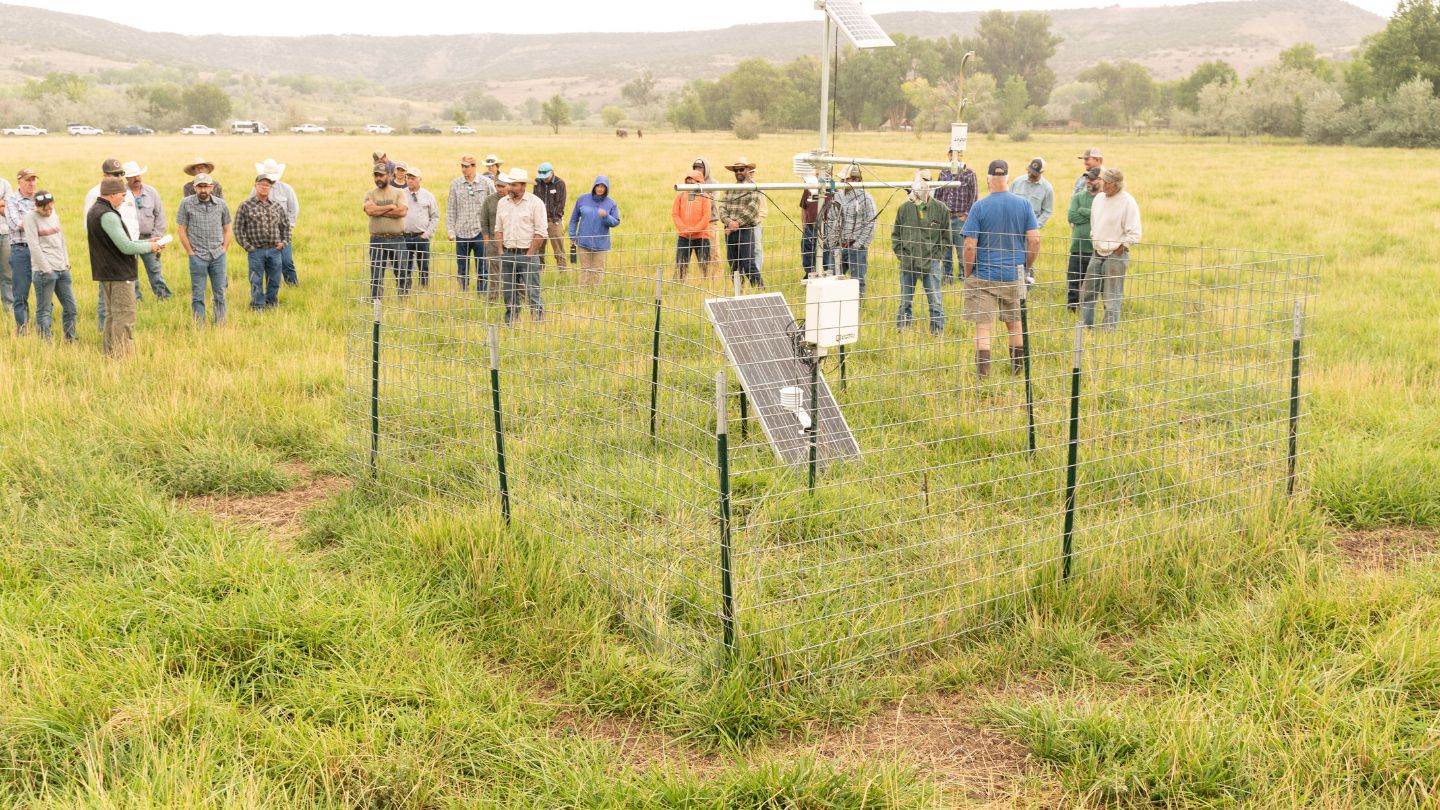
We talk about water, water. It’s very real, but it’s also very philosophical. Um, and Perry, I think we’ll probably have some, some [00:12:00] images of these actual devices that you’re using, but you guys are putting together these kind of wild looking and antenna slash things in the ground.
Could you give, uh, people an explanation of how you physically measure these, uh, of evapotranspiration rates?
Perry Cabot: Yeah, that’s great. I mean, most people are, are aware that, uh, we have our land set satellite systems, um, orbiting the earth, and we’ve had those for many decades. Uh, the, the sensors on those satellites have continued to improve in order to give us imagery of the earth’s surface at better resolutions.
And we don’t need to get into the, you know, the science of, of, of imagery modeling or anything like that. But you can, you can understand, and most people are, when they look at an ortho photograph, what they’re seeing is a collection of pixels within the visible light [00:13:00] spectrum. Well, the sensors that are taking those measurements also include sensors that can take visual imagery outside of the visible spectrum. They, it can do, it can do literally do thermal, it can do temperature. And, and this is, you know, it’s astonishing technology, but what you can do with those kinds of visual signals and, and um, and uh, thermal signals is you can calculate water movement. If water moves, it cools, if it, if it evaporates, it cools.
Um, and, uh, and so we, we can use those images to, to measure and model, um, evapotranspiration on the earth’s surface. That’s a handy thing to do because if you’re talking about thousands and thousands and thousands of acres, there is no way to physically go out and take the kinds of measurements that I do.
You have to do a big, what I call big spatial grab. [00:14:00] And that that’s, that’s fair too because it accounts for the kind of, you know, the heterogeneity of the field system and, and you get our, you know, you get basically everybody agrees that this is a, this is an accurate enough way. It’s the best available technology to be able to make enough evapotranspiration assessments.
The problem is you can only do that once every eight days. As long as the cloud cover is, um, is decent enough for that satellite to actually see through. What it’s looking at. So where my instrumentation comes in is that our instrumentation allows us, um, to take that same kind of set of measurements, but literally on a 15 minute basis, but only at one spot.
So, you know, what your listeners could probably understand is that if you take a big map and you only have that map once every eight days. Well, your benefit of that is that you’ve got the, the large size of it, right? You get a lot of information at a large scale, but you only get it once every [00:15:00] eight days.
Well, then in order to kind of fill in the gaps of that map, you need to find some way to sort of surf between the map information on some other kind of dataset. So we have these infield sensors where I’m taking measurements. Not just every day, but every 15 minutes. and of course on the same day as the satellite pass.
So then you have kind of an anchor where you have a, a known piece of information in the field that that satellite is looking at, and then you’re sort of riding that piece of information to the next map so you can kind of fill in all the gaps because taking the measurement once. Every eight days it’s not enough to get a handle on how much water’s being consumed over every day within a 30 day cycle.
You can’t just interpolate. Between two maps on a linear basis because the weather changes. And so there’s lots of things that would mean if you could take a map every day, that’d be great, but this, that’s not how the satellites work. So we have to find a way to kind of leapfrog between, so that information, [00:16:00] that information that we collect from those sensors, that’s exactly what they’re for.
The label we normally use for that would be ground truthing. It’s just checking on the ground whether or not the mapped imagery is accurate in that pixel, and we know, you know, we make that correlation, which then we can extend largely to the other pixels and we can use it to leapfrog.
And ultimately the goal is we need to know on a monthly basis how much water is being consumed. In either scenario, fully irrigated or irrigation withdrawal in order to make those accurate estimates of
Thomas Plank: Which, I mean, there’s also the, the in the ground aspect of this too. So one of the, the curious things, what comes from the actual not watering, the, the deficit, the irrigation deficit, is that you were mentioning that. A root structure can actually get more robust when this happens. Like when you stop doing so.
Um, and so there’s like the, okay, so you’ve got how you measure this. You can measure the [00:17:00] satellite. I’m putting my hands above my head to make a big globe right now. And then you’ve got the narrow one, which I’m putting my fingers together to show a little point just for people who can’t see this. But then there’s also the in the ground aspect of this, which is the actual changes.
To the grasses or the other, uh, the forbs, what, whatever’s in this field that’s, that’s growing, that you’re also taking measurements and getting ideas on how this is impacting. Right.
Perry Cabot: Yeah, I think, I think that’s mostly correct. Um, the, what you’re referring to the studies that we do. That’s okay. I mean, I’m, I’m only mostly correct most of the time. Um, what you’re really referring to is, is the yield numbers that we get from those fields where we go out and we have to physically understand, not just based on these vapor movements.
‘Cause the farmers are not, they, they’re not selling movements of water. That, that’s not, that’s a, uh, they’re utilizing that water [00:18:00] to generate something in that, in their most cases, they’re using it to generate. Grass, which then they’re using to feed their cows. So, what we have to do alongside the understanding of the consumptive use is we have to understand what the impacts are on the actual biomass production.
And that unfortunately can’t be done with an instrument. It can’t be done with a satellite. It involves physically going out to the piece of property, clipping grasses, drying them down and doing this just. In, you know, just doing hundreds of these, of these snapshots, um, so that we can understand what the downside is, what is the actual negative impact to the grass production.
Um, uh, and that’s important because the farmer’s bottom line is really about what they’re losing. From not irrigating how much, how much grass. They’re not growing, and that’s a quantifiable monetary amount. If I have this many bales last year and I have fewer bales this year, that’s something that they can legitimately say, I’ve been [00:19:00] impacted.
Yes, I’m participating voluntarily, but there’s a way to talk about what that, at least. That’s one component of the impact that they, that they, um, incur economically. Uh, I, I will say that the root structure question’s a little bit more complicated because it depends on what kind of plant you’re talking about.
We see the behavior of some of our more robust forage legumes, like alfalfa, we’re studying sandfoyne. Uh, some of these crops are, they’re very durable against drought. Now. They don’t necessarily improve their root structure, although, you know, if you don’t water an alfalfa field, it has a tendency to just keep going and finding more water.
And generally that takes the form of, of either, you know, digging and tilling deeper. Um, or, uh, yeah, I mean, that’s the main reason. It just finds or utilizing the amount of soil moisture that’s existing in the soil to a greater degree. And what it, what that means is eventually it’ll [00:20:00] just deplete the amount of water that it, it won’t just go on forever.
Grasses can do that as well. Uh, they don’t tend to have quite the same aggressiveness when it comes to surviving against drought as like alfalfa does. They don’t quite have the same rebound. Um, it, it does depend on when the irrigation restriction happened. So in other words, if it’s a full year of restriction, I mean your grass is going to suffer and we see notable multi-year recovery pathways.
In other words, if you stop irrigating a typical grass hay field in, in one year, we see that legacy effect lasting. Three years down, those grasses are still, and they may have changed even. So, you know, and you have to be worried about the weed pressure that may show up if you don’t irrigate. You have to be worried about the species composition.
Some grasses, Broome grasses are more durable against drought than like a timothy grass or something that the producer, you know, might prefer to have there. That’s where [00:21:00] you, that’s where the economic impacts really start to come in because, uh, what they’re growing fundamentally is a quality product.
You know, it’s not just like how much biomass I have, uh, it’s about what is the quality.
Thomas Plank: Important to note. And then my next question as well, Perry, is, you know, you’ve worked, you work with farmers on a regular basis. You’ve been with these irrigation withdrawal programs. You’re, you’re deep in it, in, in the deep end, uh, as we as, as you say.
But I’m curious how you how do you approach farmers when you want to do a study on something involved with water?
Perry Cabot: yeah. I mean, I’ll say this, I, I don’t. I, I’ve been fortunate in, in the work with the Western states folks they were already enrolled. I mean, they’re, they’re like a perfect living laboratory because they have, you know, access to a lot of land. They have a lot of flexibility and they’ve just been great partners in hosting our experiment stations. I [00:22:00] mean, that’s a great question. So I mean, I more or less operate from the perspective that nobody’s in the dark about this issue on the Colorado River. I mean, there, there’s a well known. Lack of water for the amount of demand there is on the river, and that that lack of water is, you know, partly driven by the, you know, the historic context of the compact as well as the fact that every people wanna live in the West and we need to continue to have our agricultural economy survive.
So, you know, nobody’s in the dark about that. And what I’ve generally found is that farmers would rather. Have information that they don’t necessarily like, but they prefer to know it. It’s just a very pragmatic thing about being a farmer. you don’t wanna hide and say, I don’t, I don’t wanna know that it’s gonna rain tomorrow.
like, they wanna know because they really wanna be facile with the, with the information. They, they wanna know when others are coming to them and saying, Hey, you know, this is. [00:23:00] Some money you could access for this kind of program. My role is essentially just to document what kind of impacts are happening from the perspective of the water or the grasses.
So I’ve really always found that and it may just be that I tend to work through the irrigation companies and others, and these are folks that are really savvy and they understand, I mean, they’re generational water holders. They’ve always just been very welcoming to the work that the university does because they prefer to have the information at their disposal.
They, we want engaged scholarship. That’s a big push at our university. So they, they, they receive, um, receptive to that.
Thomas Plank: People want the right information, and it’s just a natural thing.
Perry Cabot: If you want to negotiate, you wanna have a complex discussion, you prefer to have information or at the very least, you prefer to be involved in a conversation where people are trying to get that information. So, you know what you don’t
Thomas Plank: So, and you know, with, we’ve talked about these other projects that you’ve been working on and how that can kind of go [00:24:00] involve a whole bunch of stuff. I mean, we went from satellites to, to root growth to how you actually, the importance of information Here. Again, it’s a very philosophical podcast, but yeah.
The next thing I’m interested in is what are you working on now that you’re looking at and are going, huh. That’s something very curious that I’m interested to know more about.
Perry Cabot: Oh, it’s such a great question. you know, this is where you sort of unavoidably have to confront the fact that that agricultural consumptive use is the dominant water consuming fraction of the Western slope. And that amount is not, you know, is, is, is while it’s very large. it’s also very small, uh, considering the, the magnitude of the issue on the river. And so where you start to try to nibble at impact is you start looking at land that can be enrolled in. Pilot programs like the ones we’ve discussed, um, and like how much land you could get enrolled and why that would be the case, and how, you know, how, how you could [00:25:00] possibly get that many people to participate.
And some of that becomes an, you know, an economics question about, you know, what level of risk. willing to accept from like a partial season irrigation versus what level of risk of, you know, they’re comfortable with a full season restriction. And that again, it’s, there’s more than just like rational economics that goes on there.
There’s a lot of, again, there’s a lot of interest that people have in whether or not it’s even gonna work. Um. So that, that introduces the, the irrigated pasture land condition, which is really the way you play around. These are perennial systems, so just like outright changing them Is so complex that it’s literally just a matter of like, you’re, you’re having to plow up fields and, um, and reseed.
And we’re talking like major, major, uh, upheavals, literally upheavals of, of the ground. Um, so where I’m going with that is the next tier of impact you start to have to look at is our, our alfalfa crops. Now alfalfa is a, it’s extremely durable market ready crop [00:26:00] that farmers know how to grow. And so, you know, there’s this, there’s often this discussion that says, you know, well if we just didn’t farm alfalfa, uh, you know, we would find this extra water.
And, uh, to me that’s just a foolish conversation because farmers are. know how to grow this crop. It’s market ready and, and to be quite frank, our own, all of our economy is built into this livestock agriculture. So what excites me though? Are some of what we, we call, we just call flexible options for other kinds of forage crops that, you know, and you’re not gonna grow alfalfa year to year.
You can’t have an alfalfa field constantly. You know, there needs to be rotations and so what I’m really excited about are some of these market opportunities around other kinds of forages. Not competitive to alfalfa, but sort of complimentary and maybe even like new markets. So one of the ones we’re looking at is the sandfoyne crop.
It’s a, it’s an, it’s a, it’s a forage legume, similar to alfalfa, but it has, it has a different blooming and harvest schedule, [00:27:00] so it, it can be harvested earlier, two, three weeks earlier than alfalfa. So right there you’re opening up, uh, an opportune for a market that doesn’t like, there is no market for. You know, an alfalfa crop that’s far too early because it, the yields aren’t there.
You have to wait till the alfalfa blooms. But if you have a crop that’s like, wow, it’s ready to be pulled, you know, at the beginning of May, that’s incredible. And a lot of these crops have higher feed quality. So right there you’ve got an earlier blooming, earlier harvesting, higher quality kind of a forage.
Now you still grow alfalfa, but here’s just another thing that you can do. and we’re looking at whether that crop has slightly less consumptive use and it can withstand, uh, purposeful withdrawals. So that’s what really excites me is the challenge of saying, we know that, you know, we’re not, the goal is not to sort of turn the Titanic around.
That’s, that’s impossible. The goal is to actually introduce new and new markets. That, you know, yes, it’d be great. Okay, if they have lower consumptive use, [00:28:00] great. But you don’t get that to happen by explaining to this farming community, well, we have great news. You know, you’re gonna lose money on this thing we’re gonna tell you to do.
Thomas Plank: That’s a tough sell on any day, but particularly, particularly here.
Perry Cabot: Yeah. It’s really what’s exciting to me is looking at these flexible
Thomas Plank: No, that’s, that is super interesting.
Perry Cabot: And Alfalfa is well researched there. There’s literally decades of research on alfalfa. We don’t have as much research on some of these alternative forages, so that’s what’s exciting
Thomas Plank: I mean, you’re in a pretty good place to work on that as well in the Western slope, so you’ve also got your work cut out for you too. In general, the biggest problem potentially, you know, being faced in like, uh, this neck of the woods and millennia. Whole other questions on like economic viability of these thing.
I mean, Perry, you’re right in the middle of you. You really know how to pick ’em.
Perry Cabot: It’s fun. I mean, it’s, I mean, and believe me, I, I, I don’t think I’m, [00:29:00] I think there are people that take the beatings on this and I get to sort of be the. The researcher and they have to go out there on the front lines and really explain these things and endure the complexities of all this. So I, I, I still have the benefit of just, I have a very fun job and, um, I, I am just, like I said, I’m just thankful that, you know, most of the people I work with are, they enjoy the work as much as I do.
It is just important stuff. Important stuff, especially in in the water world. Oh, yeah. Yeah. If you, if you can’t be optimistic, I mean, it, it is really easy to get, you know, despondent about the whole thing. And I, like I said, I, I watch the, the folks that represent our state in water at these, at these higher levels. And I just, I, I, I’m just an admirer of their tenacity and their intelligence.
Thomas Plank: complex set of issues, but uh, with people like you learning more about ’em, the better off we are. Um, and, you know,
Perry Cabot: Hmm.
Thomas Plank: yeah,
Perry Cabot: We need more of them. I’m not young. You can, you can tell from looking at my beard, I’m, I’m not going [00:30:00] anywhere, but I’m getting there as fast as
Thomas Plank: So this is also a recruitment pitch that if you want to go into learning about agriculture.
Perry Cabot: I’m, I’m saying to, to anyone out there who really wants to have a, a, you know, a degree in higher education that you feel like you can have an impact. I would highly look at agricultural water, use agricultural technology. Uh, is never going to be a, a society that doesn’t benefit from being able to produce its own food and control its own resources.
And so there’s this, it’s always gonna be jobs in that profession. We’re gonna do it differently. We need different kinds of thinking. Um, and I mean, my career is now trending into the use of AI for irrigation prescriptions and things like, I mean, these are well beyond wherever I, I thought I was gonna be even 10 years ago.
But there’s, yeah, there’s, there’s great future for this kind of
Thomas Plank: it’s true, it’s true. Or you could go into the liberal arts and be the guy asking the questions behind a microphone.
Perry Cabot: Well, you probably have more of [00:31:00] a reach than I do,
Thomas Plank: That’s why we’ve got you on Perry. That’s why we’ve got you on. I.
Perry Cabot: we have a good
Thomas Plank: Um, but yeah, I think Perry, that’s, that’ll cover it all for today. But thank you so much for your time, your expertise, your patience, particularly your patience. And, uh, it was a pleasure.
Perry Cabot: No, you ask good questions. You’re trying to understand, and that’s what’s matter, what’s matters. You, you’re, you’re not making knee-jerk assumptions. You really are trying to dig into giving your listeners the right explanations. So thanks for letting us do that together today.
Thomas Plank: it was a pleasure talking to you.
Credits
Thanks again to Gus Westerman for joining us today.
Thanks again to Perry Cabot for joining us today.
On Land is a production of Western Landowners Alliance, a West-wide organization of landowners, natural resource managers and partners dedicated to keeping working lands whole and healthy for the benefit of people and wildlife. This episode was produced by me Thomas Plank, with support from Zach Altman, Louis Wertz and the Walton Family Foundation. Thank you.
Our new theme song is ‘Moon over Montana,’ performed by our friend Sterling Drake.
If you enjoyed this episode, share it with a friend, leave a review wherever you get your podcasts. Your support helps us amplify the voices of stewardship in the American West. Thanks for being here. We’ll see you next time.