Idaho’s King’s Crown Organic Farm and Ranch
In southern Idaho, where annual precipitation averages less than eight inches and spring winds can strip bare fields down to sand in a matter of days, every management decision carries weight. For the Jones family of King’s Crown Organic Farm and Ranch, conservation is not a standalone project or a grant-funded add-on. It is a long-term economic and ethical commitment that requires forgoing short-term revenue in favor of soil health, ecosystem function, and the future viability of the working lands they steward.
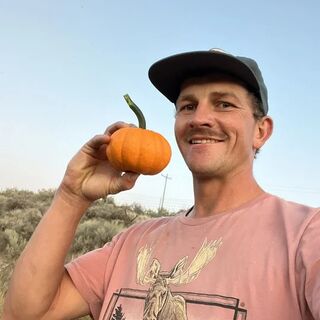
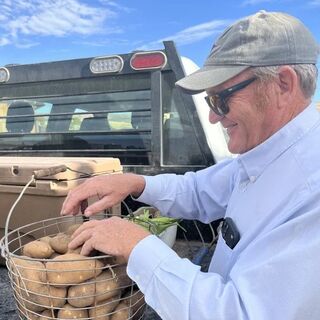
King’s Crown has been “turning photosynthesis into nourishment” for four generations. Managed today by father-and-son duo Nate and Wilder Jones, the operation spans roughly 700 acres of deeded farmland and approximately 18,000 acres of public grazing allotments under Bureau of Land Management permits. The farm produces a diverse mix of certified organic crops, including alfalfa, corn, wheat, dry edible beans, specialty crops, and livestock. Across that diversity, one principle guides every decision: production choices are inseparable from conservation outcomes.
Conservation as a Production Decision
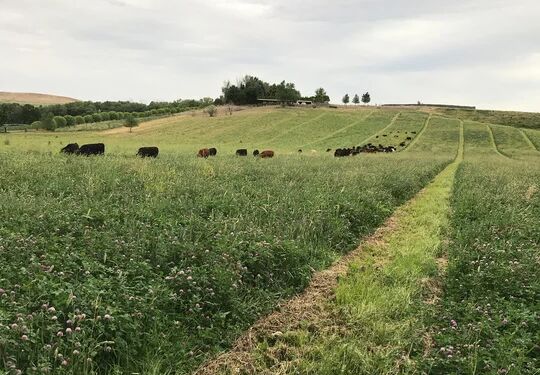
Over the past decade, the Jones family has made a notable shift within their business by replacing a portion of their dairy-quality alfalfa acreage with diverse perennial pasture. On paper, the decision is costly. Dairy-grade alfalfa in the region can yield six to seven tons per acre annually across multiple cuttings, grossing up to $2000 per acre in favorable markets. By contrast, pasture generates far less direct income, often just enough to cover basic costs such as land rent, irrigation water, and labor.
Yet the family has committed nearly 100 acres at a time to pasture, knowing that the choice represents a substantial opportunity cost. Depending on markets and acreage, the forgone gross revenue can reach up to $100,000 annually.
“We’re definitely not making any money growing pasture,” says Nate Jones. And yet, the family describes the shift not as a loss, but as an investment.
Trading Immediate Returns for Long-Term Health
“I love everything that the dairy-quality pricing has done for this farm and our profits,” says Wilder Jones. “It’s been a huge part of the profitability of this place, that’s undeniable. So to ask, ‘how can we go without the thing that pays the most,’ is crazy as a business model.”
On paper, converting alfalfa to pasture means giving up reliable annual income. But the Joneses view the trade differently. Perennial pasture, they argue, builds something alfalfa alone cannot: long-term soil capital.
“We know that having perennial stands allows the soils to rest, aggregate, and complexify over time,” Nate explains. “Changing the alfalfa for diverse pasture is a no brainer from a soil health standpoint. All that diversity is just lending itself toward fertility.”
That fertility is not abstract. The pasture is also used to feed the operation’s cow–calf herd through management-intensive grazing, which converts plant biomass into beef, plus manure that remains on the land and strengthens the farm’s internal nutrient cycle.
The Joneses have committed nearly 100 acres at a time to perennial pasture, knowing that the choice represents a substantial opportunity cost. Depending on markets and acreage, the forgone gross revenue can reach up to $100,000 annually.
That reframing is intentional. For the Jones family, the pasture conversion is not about rejecting profit, but about redefining it.
Given southern Idaho’s sandy soils, not having ground cover can be a risky game. “If you don’t have something on your ground, then it’s going to blow away,” Nate says. Perennial pasture provides that continuous cover, eliminating bare ground and supporting diverse plant structure, insects, and birds. In a landscape prone to wind erosion, those qualities translate directly into soil and nutrient retention. The value of that protection may not appear on an annual balance sheet, but its importance compounds over time. “Soil health is generational,” Wilder says.
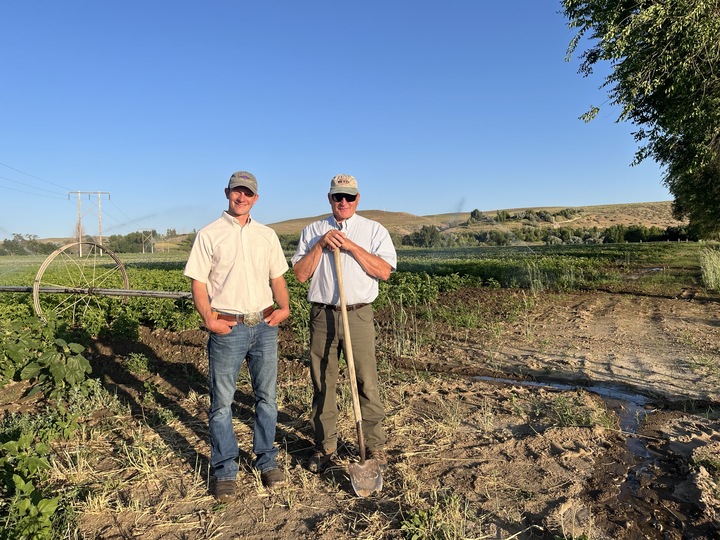
Rather than viewing soil improvements as intangible benefits, the Joneses treat them as deferred returns. Fertility built during years in pasture is later accessed through improved yields, reduced input costs, and greater resilience during dry or windy seasons.
“I would hope that the health of the soil will be better when I’m gone,” Nate adds. “That’s been the underlying goal all along.”
“I want to do this so that this operation continues to be a farm and a ranch in the future,” Wilder says. “I think that the ability to preserve land does not always hinge purely on economics. If it did, the best way to stay in business would be to grow dairy-grade alfalfa instead of converting to perennial pasture. But I don’t see it that way.”
Rather than viewing soil improvements as intangible benefits, the Joneses treat them as deferred returns. Fertility built during years in pasture is later accessed through improved yields, reduced input costs, and greater resilience during dry or windy seasons.
In that sense, pasture is not a dead-end use of land. It is an actively managed component of the production system and an asset under development. In other words, it is an investment in biodiversity today that benefits production and profit tomorrow.
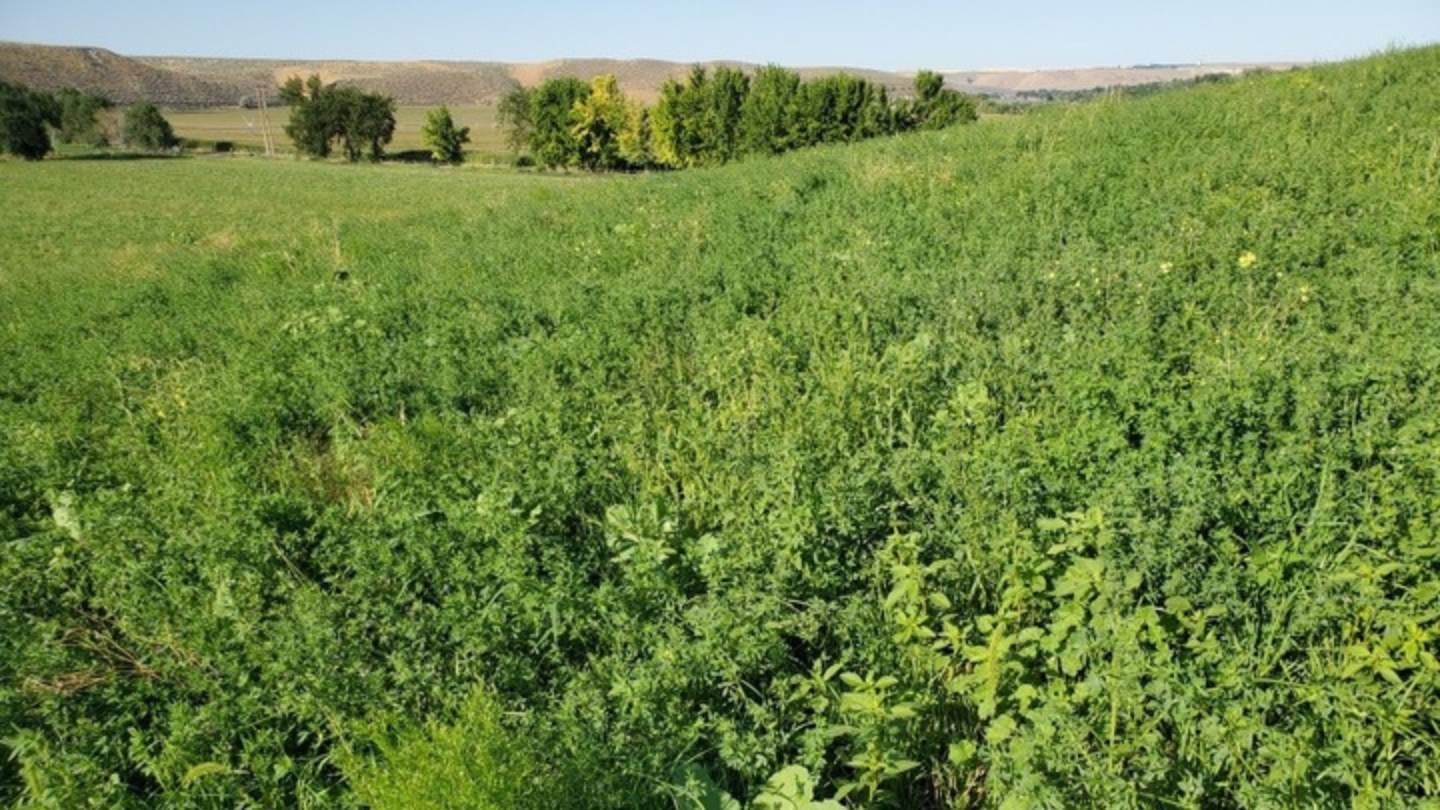
“The pasture is amazing,” Wilder says. “It has all kinds of diversity: forbs, grasses, and weeds. You go out there and it’s bug mania. You see bumblebees on red clover and lady bugs everywhere.” He pauses. “You see it and think, ‘This is right, this feels really right.’ Sometimes it’s about this feeling and not about being a slave to the premium commodity.”
Conservation as Continuity
The pasture conversion is one component of a broader conservation strategy grounded in the Jones’s land ethic. The Joneses do not view conservation as a series of isolated projects, but as the cumulative result of everyday production decisions. “We are attempting to have these pieces of the farm function as part of the ecosystem,” Wilder says.
“We’ve done the flashy, classic wildlife conservation projects, like riparian stream restoration and exclusions,” Wilder says. “But we also have so many examples of conservation on our operation that folks wouldn’t think of.”
Some of the most meaningful investments are subtle. “We left our fences in and didn’t farm straight to the asphalt,” he explains. “I consider some of our best conservation to be the 10 feet from what the highway district takes care of to where our cows are.” Those buffer zones support plant diversity, store carbon, provide shade, and stabilize soil without ever being labeled a conservation project, and they represent lost income in the standard fencerow to fencerow economics of agriculture today.
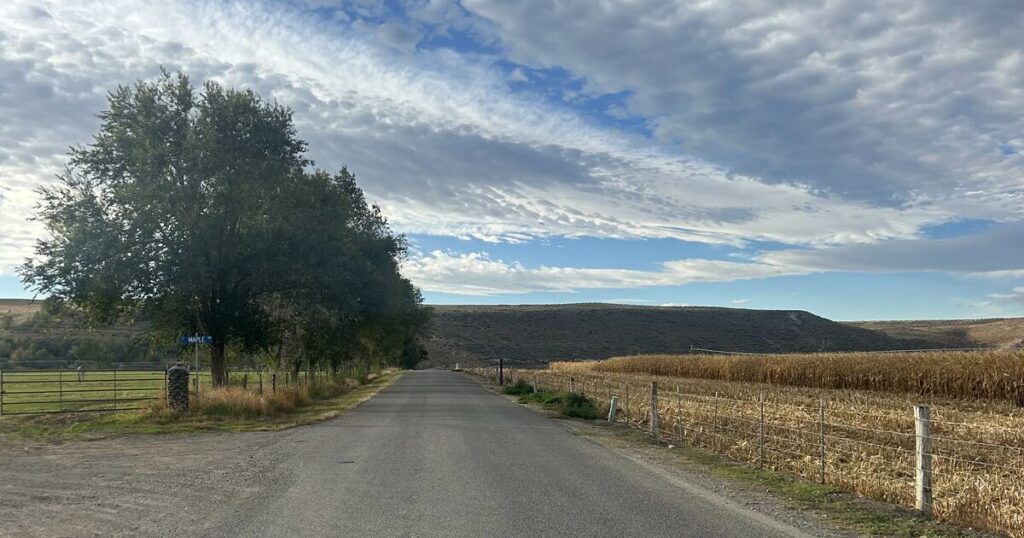
Tree planting is another long-term investment that they take seriously. “Planting trees is one of the highest-return conservation practices on a farm,” Wilder says. “They provide shade, reduce erosion and water loss, build soil through leaf inputs, support pest control, and add food, fuel, and usable space by growing vertically.” Like pasture, trees demand patience. Their benefits compound slowly but persistently.
Taken together, these practices reflect a systems-level approach to land stewardship. The goal is not to maximize output from any single acre in a given year, but to ensure that the farm functions as a resilient, productive whole over time.
Keeping land in, or returning it to, agriculture, and investing in its long-term function, is itself a conservation act.
Keeping Land Productive is Conservation
The Joneses are candid about what they are giving up. “We could probably make a lot more money doing something else,” Wilder says. And in strict opportunity-cost terms, many of their conservation practices look to be inefficient. “When you look at it in terms of opportunity cost, it makes us sound foolish,” he admits. “But we do believe that we see the ecological and economic return in future years.”
That perspective extends beyond their own operation. “Every piece of land has missed opportunity cost,” Wilder says. “We’re just witnessing the missed opportunity cost within our own industry.” He points to ranches sitting over mineral deposits, farms bordering subdivisions, and even their own fields. “There’s a piece of land that we farm that used to be a gravel pit, and before it was a gravel pit, it was a gold mine. And now we’ve turned it into a pretty good farm.”
Keeping land in, or returning it to, agriculture, and investing in its long-term function, is itself a conservation act. “There would be no conservation benefit if this was a gravel pit,” Wilder says. “But we’re not letting that happen.”
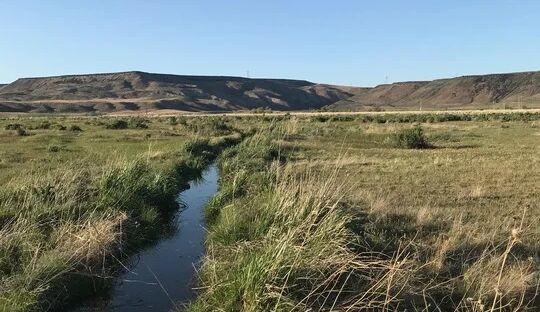
For the Jones family, a practice like converting alfalfa to perennial pasture is not about rejecting profit. The returns simply arrive on a different timeline: healthier soil, lower input dependence, and land capable of supporting a farm and ranch many generations into the future.
“I love what we do and I want to keep doing it,” Wilder says. “We are growing soil and keeping it intact. In making these changes, we’re doing right by the land and also making a healthier food system.”
In a landscape shaped by wind, scarcity, and competing land uses, that long view is not idealistic. It is strategic. Conservation, in this case, is not something added on after the fact. It is the business plan itself.