New Report Shines Light on Importance of Private Land Stewardship to all of us
“If we take care of the land, the land will take care of us” is more than a timeless saying—it’s a line item in private landowners’ budgets. New research from the Western Landowners Alliance reveals that, across the American West, landowners are investing hundreds of millions of dollars of their own capital in conservation, matching public funds to keep working lands—and the benefits they provide—all alive.
Importantly, landowners who tend to the health of the land ensure our diverse publics also benefit from private land investment. Indeed, the Agricultural and Resource Economics’ Department at Colorado State University determined that Coloradoans receive between $31 to $49 annual return in ecosystem services for each dollar invested on conserved private lands.
“Our efforts to integrate a livestock and hay operation into the natural system not only benefit us,” says Dave Gottenborg, owner of the Eagle Rock Ranch in South Park, “But also the public by protecting essential resources like clean water, sequestering carbon, and wildlife habitat.”
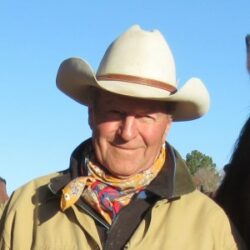
The craggy cowboy-hat wearing rancher doesn’t look the part of environmentalist. His ranching practices—regenerative—with the goal of improving the land every year, once hailed from the fringes of range management but are now accepted mainstream.
That includes fencing cattle out of streams, installing fish ladders, rotational grazing, and managing for coexistence of elk and cows.
Mr. Gottenborg told me, “The role of private working lands across the American West in providing public goods, known as ecosystem services, is perhaps one of the greatest unrecognized stories in recent conservation.” Sadly, I have to agree. Despite spending most of my career investigating and sharing these stories as a professor at CSU, this understanding is not mainstream outside of the ranching community yet. “Most such landowners, including this one, recognize the mutuality of this paradigm and are willing to financially support it,” Mr. Gottenborg says.
Not all ranchers are conservationists, but the most biologically productive land is in private hands. Private rangelands are more than twice as productive as public rangelands, with deeper soils. They are better watered, and occur at lower elevations compared to public lands. These fertile valleys, rangelands, and forests are critical year-round wildlife corridors as well as winter habitat for deer and elk and other species.
The role of private working lands across the American West in providing public goods, known as ecosystem services, is perhaps one of the greatest unrecognized stories in recent conservation.
Dave Gottenborg
Fragmentation—think ranchettes—are the greatest risk for wildlife habitat. The U.S. Department of Agriculture reported that between 1983 and 2017, roughly 14 million acres of rangeland were lost to small-acreage and commercial development. That threat is especially acute here in Colorado, with our robust economy and growing population. The conversion of agricultural land to other uses threatens not only rural communities and livelihoods but also the wildlife habitats provided by working lands.
Knowing how to steward land cannot be learned from YouTube videos. The “slow knowledge,” of local stewardship is gleaned from generations living close to plants, animals, water, and soil. Wendell Berry had this slow knowledge in mind when he said, “In the years to come we will need ranchers, loggers, farmers, and irrigators as teachers, mentors, and critics.”
In this era of right now, we are often caught in the trap of thinking we can “accomplish” conservation through one-time purchases of land protection or massive investments in restoring a degraded site. But that immediate satisfaction, though well-earned and often hard-won, neglects the reality that all healthy land requires ongoing stewardship: daily choices and actions by owners and managers that keep land whole and healthy.
To wit, Western Landowners Alliance’s report finds that on top of out-of-pocket spending, nearly 60% of landowners forgo income-generating opportunities to benefit wildlife and other natural resources. The study found that only costs and constraints, not desire, limit conservation spending for most landowners.
Mr. Gottenborg captures the value and commitment to daily stewardship when he says, “What we’ve done has been at our expense as a result of being curious about the water, plants, animals, and soil of the ranch. All in all, it remains an effort to dwell on the land and become a good citizen of this place.”
Of course, landowners need to keep a close eye on their bottom line, however, this new report provides additional insights into an underappreciated aspect of land ownership: the steady stream of investments in land health that owners make that benefit us all.