Another deadline comes and goes. What will happen to the water in the Colorado River?
Valentine’s Day was supposed to be the time when the Upper and Lower Basin states in the Colorado River kissed and made up, drew up an agreement that would get them through the next five years, and signed on the dotted line so everyone who relies on water in the basin would know what to expect until 2030. Stability is the golden word in the water world, and the inability to get to a stable agreement will have repercussions for landowners, producers, and likely millions of people who live in the major metropolitan areas in the American Southwest.
Now, the Bureau of Reclamation has moved the due date for new reservoir operating guidelines to October 1, and Secretary of the Interior Doug Burgum described the negotiations as “productive.”
“We have listened to every state’s perspective and have narrowed the discussion by identifying key elements and issues necessary for an agreement,” Burgum said in a February 14th press release from the Bureau of Reclamation. “We believe that a fair compromise with shared responsibility remains within reach.” he said in a press release published by the Bureau of Reclamation right after the February 14 deadline passed.
Possible Futures
A draft environmental impact study released by the Bureau in January includes five proposed alternatives: “no action” alternative, basic coordination alternative, enhanced coordination alternative, maximum operational flexibility alternative, and supply driven alternative. Initially, the states were aiming to come to an agreement that would guide operations for the next 20-years, but after missing the most recent deadline and with deep uncertainty remaining in the Basin, water managers are eyeing a much shorter term of 5 years to allow the states additional time to find agreement, though current talks have already been ongoing since 2022.
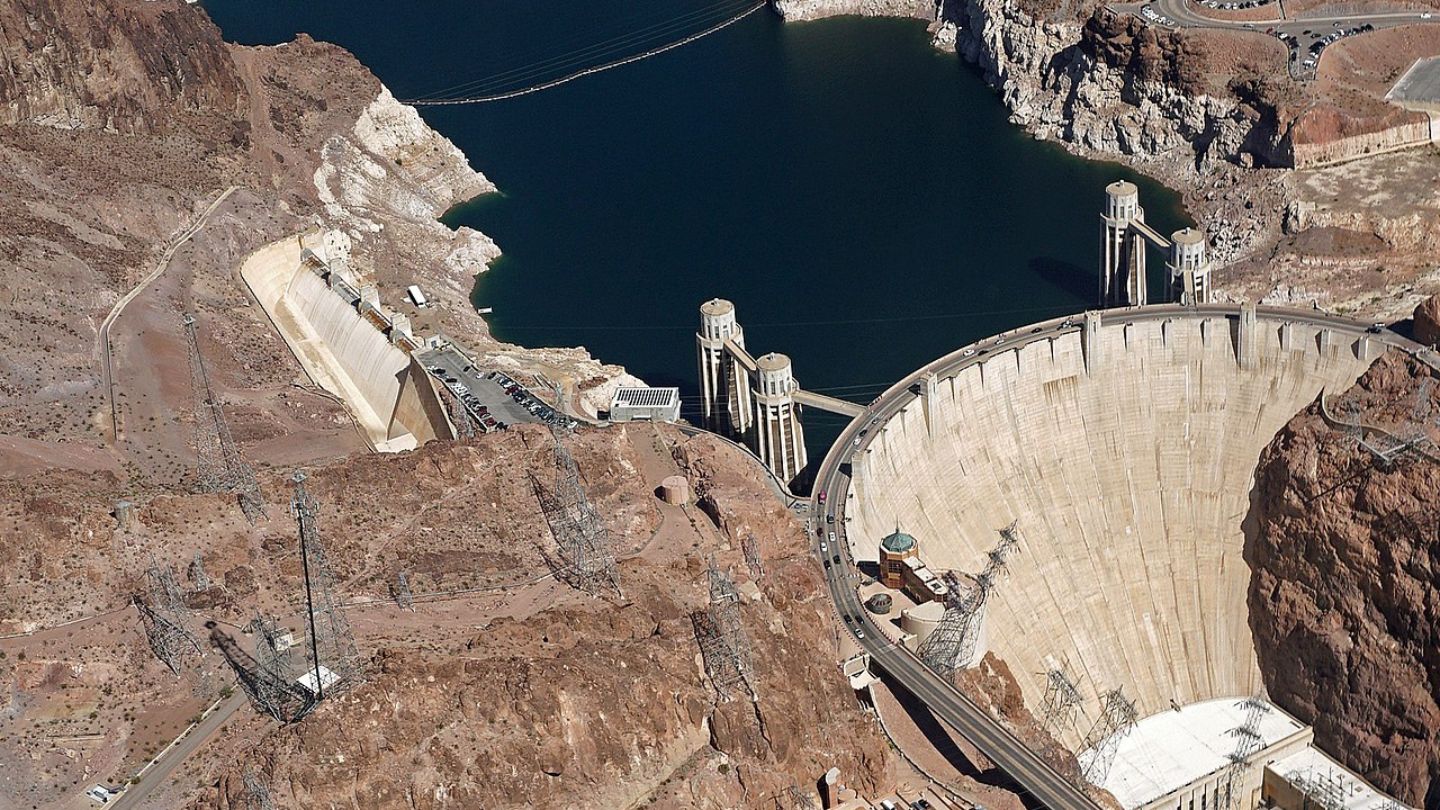
The outlined alternatives describe very different futures for the Basin. At least one of those options calls for 4 million acre-feet of cuts in the Lower Basin, others would seek 200,000 acre-feet reductions in the Upper Basin under shortage conditions, and some maintain the status quo, despite deep risks. Only two of the alternatives can be implemented under current Bureau authority. Both of those alternatives, models predict, will result in critical dam infrastructure failures in the short term. One of those alternatives would require the Bureau to continue to release between 7 and 8.23 million-acre feet of water from Lake Powell each year, even in years when inflow is significantly less, such as in 2025 when only 5.4 million acre-feet flowed into Lake Powell. With storage in the reservoir already severely depleted, continuing to release more water than enters the reservoir will result in reaching critical water elevations that could compromise the dam and water deliveries to the lower basin. While the states continue to negotiate, the Bureau will begin the process of selecting a preferred alternative, a complicated process that may include a new alternative, state agreements, or seeking additional authority from Congress.
While the Bureau projects optimism, states are adding money to their legal reserves. Meanwhile, this winter’s severe snow drought is bearing down on the 2026 water year like an angry grizzly. Getting to a deal is more important than ever yet negotiators appear as far apart as ever.
Long-time Colorado River expert sees pain on the horizon
To get to the bottom of what this means for landowners and water managers in the Basin, I got in touch with Eric Kuhn, former general manager of the Colorado River District and Colorado River Basin water policy lifer. Kuhn is one of the foremost experts on the Basin. When asked about how stalled negotiations are going to impact the millions of people in the Colorado River Basin, he offers caution to anyone going into doomsday spirals.
“It’s difficult to say that it is going to impact any one family,” Kuhn said on February 20, a week after the negotiation deadline passed. “Will this cause someone to go turn on their tap and no water comes out? No.”
“It’s difficult to say that it is going to impact any one family,” Kuhn said on February 20, a week after the negotiation deadline passed. “Will this cause someone to go turn on their tap and no water comes out? No.”
Kuhn is a Basin historian, and notes that these problems and disagreements are not new. In fact, these disagreements about which state gets what water were why the current battle lines are drawn the way they are.
“Negotiators said, we can’t accomplish our goal of splitting water among seven states, let’s make an Upper and Lower Basin instead, with a dividing line in Arizona. The smaller groups can get together and divide things up among that themselves,” Kuhn recounted.
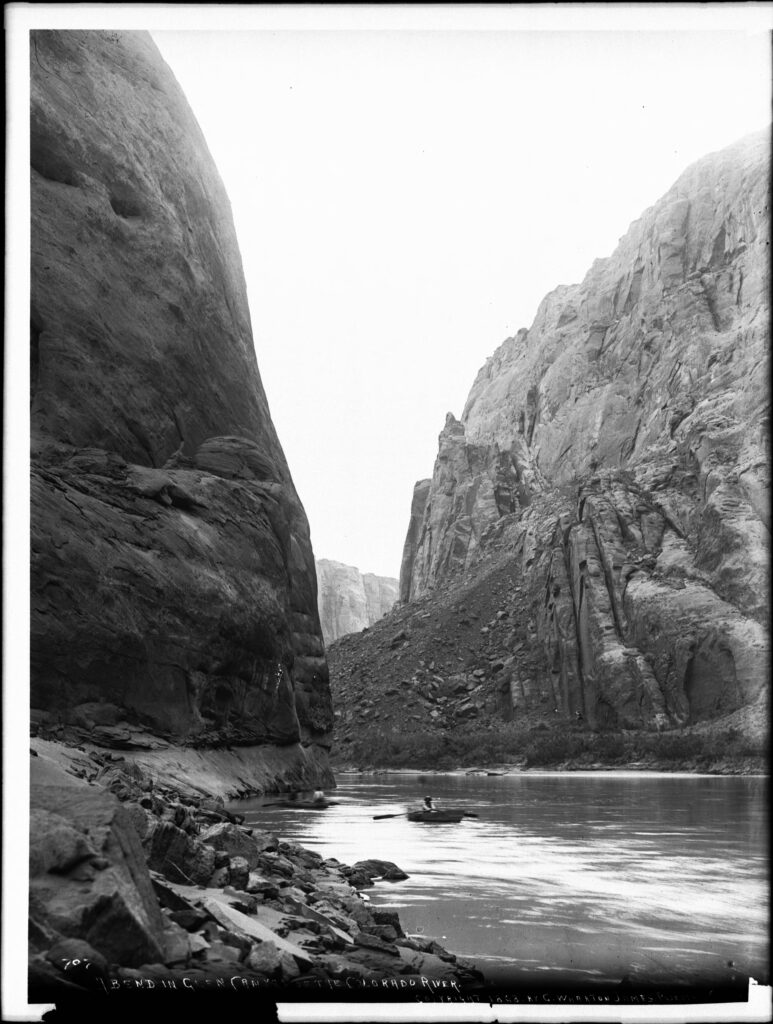
At that time, negotiators believed there was 20 million acre-feet of water running down the Colorado River each year. More accurately, negotiators ignored scientists’ lower estimates of the river’s actual flows, according to a book co-authored by Kuhn called Science Be Dammed. Instead, negotiators used numbers derived from one of the wettest 18-year periods in the last several hundred years. The assumed acre-footage measurements were optimistic, to say the least. In fact, the Colorado annually drained 17-18 million acre-feet in the 1920s, with longer-term measurements falling between 14.6 and 15.1 million acre-feet. Since the turn of the 21st century, the Colorado River’s total discharge has averaged between 12.1-12.5 million acre-feet, and future projections tend towards even lower numbers, potentially as low as 10 million acre-feet. To put those numbers in perspective, the Colorado River is not even in the top 10 rivers by discharge in the United States: it is all the way down in 38th place.
“The Colorado is a desert river, most of the area it drains is high or low desert. Some of it is in the watersheds of mountains, but almost all of the water comes from a few spots,” Kuhn said.
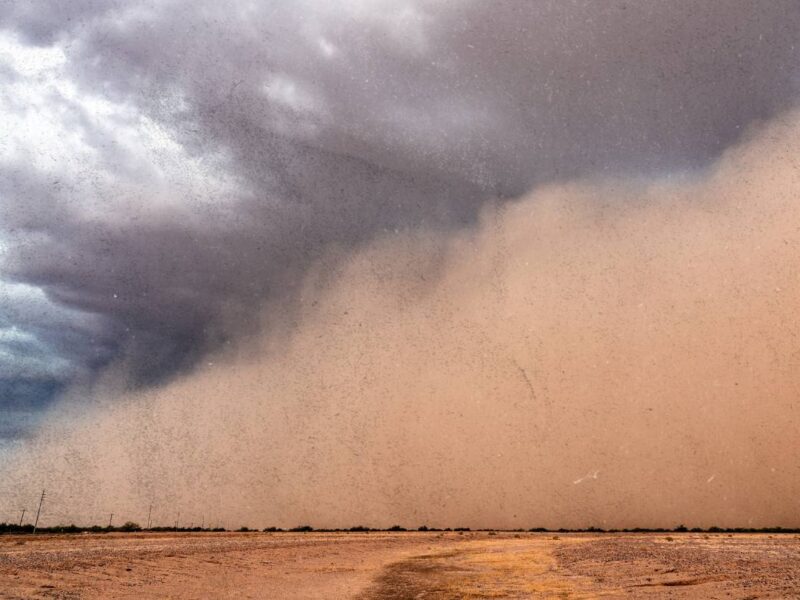
Rising temperatures have taken a bite out of the river’s water, as have dust on snow events, earlier runoff, thirsty soils, and decreased precipitation. Plants, both native and agricultural, need more water to grow in a warmer climate, and that means producers need more water to survive. Kuhn noted that until recently, there had been plenty of water in the system, in part, thanks to the two enormous dams along the river that provided storage for excess water in wet years that could be used in drier years. In 2000, Lakes Powell and Mead were 95% full. But with declining amounts of water in the river, and the water storage accounts being depleted in the system over the past decades, political conflict became inevitable.
“With development, projects long planned, sought after, and authorized by the feds, states, and cities, and reduced yields in the watershed has created a situation where we are using more water than the river will provide on a sustainable, long-term basis,” Kuhn said. This overdevelopment is the result of a 125-year-old bill passed by Congress: the Reclamation Act. In 1902, the federal government subsidized irrigation projects to draw people west to farm and ranch.
“The subsidized construction of irrigation projects and subsidies led to overdevelopment, and now we are in this pickle and what do we do?” Kuhn asked.
Administrative powers and percentage-based allotments
Kuhn thinks states are not using their administrative powers to handle the difference between demand and supply.
“Upper division states don’t want to do that, lower division states don’t want to do it, and they’ll give you legal arguments as to why not,” Kuhn said.
In the West, water is the property of the public, but the right to use that water belongs to water users who have to put the resource to beneficial use.
Meanwhile, the specter of a new Colorado River Basin Compact court case is hanging over all of these discussions. The Basin is no stranger to court cases litigating water rights and interstate compacts, but a litigation over water deliveries and infrastructure operation on the river would take a decade, if not longer, Kuhn thinks. And that is not a good timeframe to handle an issue that needs a decision quickly, potentially as early as this coming summer. The Basin is going to have to reckon with hard decisions one way or another.
“This year is horrible, one of the lowest snowpacks in Colorado, and it could force the Secretary of the Interior to make some very hard decisions about how much water they are going to release to the lower basin,” Kuhn explained. “That’s where we start to get into, ‘is Imperial Irrigation District going to get a 20% cut? How do they distribute that among their irrigators, farmers?’”
“Ultimately the court will decide. They can’t make water, but they can decide.”
As it stands, irrigation uses 70% of water in the basin, another 15% is used by households and industry, and another 15% disappears from system losses, according to Kuhn.
But Kuhn says the facts of the matter and the hard numbers are going to make for a simple and difficult answer: percentage-based water apportionment. A percentage-based deal means there will be variable amounts of water available each year, rather than a specific number of acre-feet, which will adversely affect those with more junior water rights.
“You’re not going to change evaporation, and you’re not going to take [water] from people, so ultimately you’ll need to reduce irrigation demands on the system,” he said.
We aren’t there quite yet. But Kuhn says the facts of the matter and the hard numbers are going to make for a simple and difficult answer: percentage-based water apportionment. A percentage-based deal means there will be variable amounts of water available each year, rather than a specific number of acre-feet, which will adversely affect those with more junior water rights.
Moving to a percentage-based system is a difficult pill to swallow for everyone in the basin, as the Colorado River Compact currently guarantees 7.5 million acre-feet to each Basin, regardless of how much is in the river. But a percentage-based system would allow for more flexibility in the amount of water required to be delivered downstream based on the amount of water that is actually available in the system. And at this point in time, Kuhn argues, increased flexibility is vital for the long-term survival of existing agriculture, municipalities, and ecosystems throughout the Colorado River Basin.
But selling this idea to the water community is going to be hard, Kuhn acknowledges.
“Water managers, cities, farmers, they’re very engaged in this,” Kuhn said, “and they don’t want to compromise yet.”